- Thailand Amulets: Boasts a massive selection of over 5,000 items, including Buddhist amulets, occult charms, and Bucha statues. They offer a money-back guarantee on authenticity.
- Ancient Amulet: Specializes in high-end, rare, and antique amulets from various artistic periods of Siamese history. It is a premier destination for serious collectors of Pra Niyom (preferred class) pieces
- Leading Online Stores for Authentic Amulets
- Amulet City: A transparent online store where every item is 100% genuine and rented directly from temples in Thailand. All charms are guaranteed to have been blessed by Buddhist Guru Monks.
- BillionMore: Offers rare amulets and talismans with a "Power Activation" service, including English/MP3 spells. They provide export permits for Buddha statues and donate some proceeds to charity.
- BKK Amulets: Features a curated selection classified by spiritual masters, such as LP Thuad and LP Phat. They offer worldwide shipping and have a strong community feedback presence.
- Papa Amulet Shop: Focuses on revered masters' creations, famous medallions, and Thai talismans selected for their spiritual and cultural heritage.
Top Online Shops for Genuine Amulets - Trusted Shops, Prices & Authenticity
Thai Amulets of LP Lee Wat Asokaram
Pra Khao Kam LP Lersi Lingdam 2533
Somdej Gaes Chayo Wat Prasat 2506 Thai Buddha Amulet
Pra Somdej Pim Gaes Chayo 9 Chan 2506 BE Thai Buddhist Amulet, with 234 Monks present in the Puttapisek Blessing Ceremony.
Somdej Pim Sae Yid 2470 Luang Por Liam Wat Si Ruang Bun
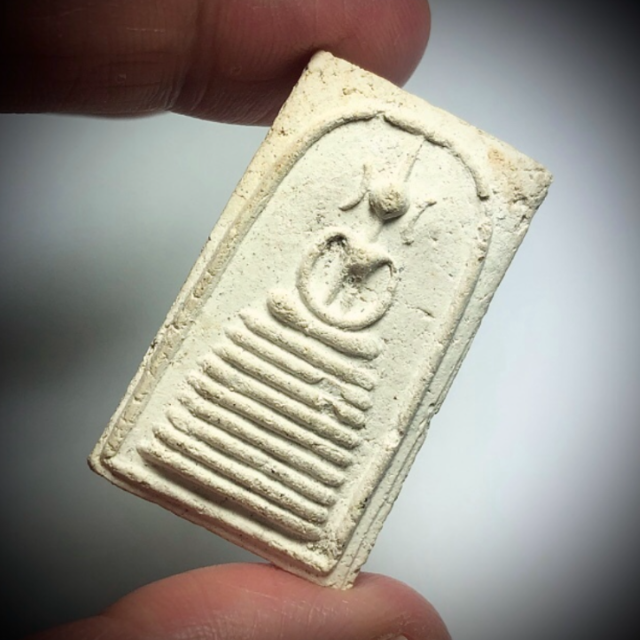
The image, and the aspects of the Muan Sarn Sacred Powders, have the inimitable features of the style of amulets which are so highly recognisable, as those of Luang Phu Liam, of Wat Sri Ruang Bun. The slim torso, has a split all the way down the middle (Ok Wee) and slanted curved elliptical elongated ears (Hoo Bai Si).
Luang Por Liam of Wat Sri Ruang Bun is a monk whose life story is not so very well recorded, because he was one of the gaeji Ajarn of Olden days, in times when it was still not common practice to record the Biographies of Monks, but from gathering info from many different books and articles, it is possible to piece together the most important facts.Luang Phu Liam was the Abbot of Wat Sri Ruang Bun between 2457 and 2480 BE, after which he retired from the duties of Abbot due to old age and and lived until the year 2488 BE when he died at the age of 82 . Luang Phu Liam was born in theIsan country, who after his ordination as a monk, began the practice of Tudong solitary wandering, and wandered westwards until he reached Nontaburi.
It was here that Luang Phu Liam stopped, to dwell in the area close by to Wat Sri Ruang Bun, and this is how he came to stay there. He was known for his diligence and self controlled practice of Vinaya in the 227 Rules of practice of Ordained Bhikkhus
The local devotees of Wat Sri Rueang Bun had great reverence for Luang Phu Liam, for his merciful abilities in Traditional Medicine and Healing Practices. At the time that Luang Phu Liam came to stay at Wat Sri Ruang Bun, the temple was in disarray, with hardly any monks staying there, and the temple had no Abbot.
So the local folk beseeched Luang Phu Liam to stay there permanently and be the Abbot. Luang Phu was about 55 years old at that time, and Wat Sri Ruang Bun was a very peaceful small temple with open spaces, which fitted with his advanced practices of serenity and silence.
And so, Luang Phu accepted the offer to remain at Wat Sri Rueang Bun. Luang Phu became very renowned for his abilities to spray holy water and banish ghosts and demons who had possessed people, and even victims of rabid dog bites, who were howling with madness, would be instantly healed when Luang Phu performed his holy water ceremony on them.
As time passed, Luang Phu began to restore and build up the temple, and the people's faith and reverence for his selfless deeds grew and grew, and devotees began to increase steadily, coming to help Luang Phu in the development of the temple. As Luang Phu saw so many devotees come to help with the work and to make donations, he felt the need to give them something in return for their help, and to protect them and bring them good fortunes.
So Luang Phu began to make Pong Lop Sacred Yantra powders and performed his most powerful Metta Maha Niyom Magic to empower them, and mixed them according to the Dtamra Pra Somdej with Plueak Hoy seashell powders, to add Kong Grapan Chadtri power along with Kluay Nam Wa bananas, in the same formula used by Somdej Pra Puttajarn (Dto) Prohmrangsri of Wat Rakang Kositaram.
He then pressed these powders into the form of amulets, which consisted of 20 or so different design models. The artisans who made the 'Mae Pim' block press molds were expert in their work and created the different designs based on the same form as was used by the Great Luang Phu Poo of Wat Intra, and also basing some designs on models from the Dtamra Wat Chalerm Pragiart, and the amulets of Luang Por Kram of Wat Pra Ngern.
In addition, a few original design models were created, that are particular to Luang Phu Liam, which completed this pantheon of 20 or so amulets. The amulets were finished in 2470 BE, and Luang Phu began to empower them with blessings continuously for the whole ten years of his time as Abbot, and to hand them out slowly to the devotees over the years which came to pass from then onwards. Luang Phu did not bury any of the amulets in Gru Chamberand kept them in the open air always, and so all of his amulets have a very
The sacredness of these almost Century old amulets are indisputable for their great age, and the fact that Luang Phu Liam made them for the purpose of free distribution to the devotees, with completely pure intentions, giving them his most diligent efforts and intense empowerment. The amulets of Luang Phu Liam are an immensely attractive alternative to the much more expensive amulets of Luang Phu Poo of Wat Intrawiharn (Bang Khun Prohm), being of great age and with complete adherence to the Dtamra Pra Somdej.
About Buddhist Amulets
Buddhist amulets are a type of talisman that is used to create a protective shield against evil. They are usually worn as necklaces or bracelets.
Buddhist amulets have been around since the beginning of Buddhism. In Thailand, where Buddhism is the main religion, it forms an important part of Thai culture and society. Buddhist amulets are often given as gifts from one Buddhist person to another.
Buddhist amulets are a traditional form of protection from illness, accidents, and bad luck. They consist of a string of beads with a small object at the end.
Buddhist amulets have been used for spiritual protection since the time of the Buddha. The amulet's purpose is to protect its wearer from harm or misfortune. Amulet's can be found in many different styles and shapes as well as made from different materials such as gold, silver, coins, gemstones, wood, bone and animal skin.
The end bead on an amulet is often ornately designed to reflect the person's faith or what they hope to achieve with their amulet - to attract love or money for example.
Buddhists believe that some amulets, called Mercy Charms, can bring protection and good luck. Lucky Fortunes are also used to bring good fortune to the wearer. Protection amulets prevent bad luck or harm from coming into your life. Invincibility amulets safeguard the wearer from any person who might try to hurt them. Anti Black Magic amulets protect against people who try to cast evil spells on you by removing their power
The most popular amulet in Thailand is a of course the Pra Somdej, but also all Buddhists around the world wear and use Rosary beads; In Japan, these beads are placed in a Buddhist’s left hand and rubbed against the right hand while chanting a single-syllable mantra known as “Nam Myoho Renge Kyo”. But Thai Buddhists prefer 'Buddho' or 'Na Mo Puttaaya'. Thai Buddhists believe in magic, and use Rosaries to chant 'Kata' Incantations, to invoke magic spells, mostly recited in Pali Sanskrit and Khmer Sanskrit.
They wear charms for protection against black magic, wear amulets to increase their luck, while some believe that they can be invincible if they have a special amulet. Mercy Charms are often used to get things done. People also use them when they are in need of help from someone, for example when they are trying to get a promotion at work or want to avoid being arrested. Lucky Fortunes are usually given out by monks who want to bless good fortune for you and make you happy all year long. These amulets can also be passed down from generation to generation.
Protection amulets are worn mainly by people who work in dangerous jobs or live in troubled areas where there is a high crime rate for example Thailand is one of the most popular travel destinations for tourists. It is also home to the largest Buddhist population in the world, with over 95% of Thai people being followers. Buddhist monks are revered by Thai people because they are seen as symbols of purity and holiness. They are often approached for help with problems that range from simple to quite serious.
This can be done in person or through spirit writing, which is a form of magical writing that only the monk can read. Mercy charms are not considered part of traditional Buddhist beliefs but they have been around for centuries and continue to be given out by monks today. Some believe these charms are made from sacred threads that have been tied during worship ceremonies or were blessed by a monk themselves.
Pra Ruang Rang Pern Gunstopper Vairocana Buddha Amulet 2515 BE Wat Phra That Doi Suthep
Maha Ud Gunstopper Pra Ruang Rang Pern Vairocana Buddha Amulet Gold Coating 2515 BE Wat Phra That Doi Suthep (Chiang Mai)
A very Special 'Piak Tong' model gold coated galvanised sacred metal alloy Buddha Amulet; The Pra Ruang Rang Pern Wat Pra That Doi Suthep 2515 BE was empowered in a very Important, Historical and Officially Documented Putta Pisek ceremony at Wat Pra That Doi Suthep.
The ceremony was graced with the presence of the Great Honorable Presence of the Great Arahant Luang Por Kasem Khemago, to assist in the Empowerment. Apart from the Pra Ruang Rang Pern,there were many other amulets blessed in this very same ceremony of importance, including the Pra Kring Chiang Saen, Rian Pra Putta Sihingk Buddha Coin, and the Rian Pra Jao Saedtangka Muni Buddha Coin (Wat Chiang Man).
This is the 'Pim Prataat Noon' (Raised relic Stupa), which is notable by the raised embossed Chedi Stupa on the rear face, there was also another version with an indented (Converse) Chedi Stupa, known as 'Pim Prataat Jom Dtua Mia'. Blessed in Puttapisek by some of the Era's Greatest Practitioners, including Luang Phu To (Wat Pradoo Chimplee), the Great Arahant Luang Por Kasem Khemago (Sussaan Trailaks in Lampang), Ajarn Nam Gaew Jantr, LP Hwaen (Sujino), and Luang Por Guay of Wat Kositaram.
The Devotees of Luang Por Guay revere and Seek this amulet with immense fervency, because of his Personal Involvement in the empowerment ceremony, and this in itself makes the amulet an ever rarer to find amulet
The empowerment performed by the many great monks present makes this amulet one of the more popular amulets of this Era, for the presence of the great Luang Por Kasem Khemago, Luang Phu To of Wat Pradoo Chimplee, Luang Por Guay, of Wat Kositaram, and Luang Phu Hwaen, of Wat Doi Mae Pang.
All of these Master Monks, have a massive number of devotees around the world, and all of which were considered Arya Sangha Supernaturally Self-Realised Beings, of the four kinds of Noble Persons within the classification of the 4 stages of Enlightenment.
Below; Luang Por Guay
There are various interpretations of who the Buddha image represents in Thai Buddhist belief system; the most common being that it is derived from the Pra Ruang Royal Family Lineage, who were the first and only rulers of the Sukhothai Kingdom Era of Thai History. This amulet is renowned for its 'Gundstopper' Maha Ud Magick, and its Serm Yos Prmotion Inducing Power, as well as being a Classic Votive Tablet in metallic form with the blessings and empowerment of some of the greatest master Monks of the Time.
Phra Somdej Wat Rakang Long Rak Chart Gaes Talu Sum Somdej Toh
Enjoy a contundently narrated video giving insights into the principles of examination of authentic Pra Somdej, by Ajarn Spencer Littlewood. This video features a Certified Authentic Pra Somdej Wat Rakang Long Rak Chart, Pim Gaes Talu Sum Block Chang Luang Wijarn , of the great Somdej (Pra Puttajarn) Toh Prohmrangsri, of Wat Rakang Kositaram.
Phra Somdej Wat Rakang Long Rak Chart Gaes Talu Sum Somdej Toh
Enjoy a contundently narrated video giving insights into the principles of examination of authentic Pra Somdej, by Ajarn Spencer Littlewood. This video features a Certified Authentic Pra Somdej Wat Rakang Long Rak Chart, Pim Gaes Talu
Sum Block Chang Luang Wijarn , of the great Somdej (Pra Puttajarn) Toh
Prohmrangsri, of Wat Rakang Kositaram.
Pra Kring Dtraimas Hlor Boran 2548 BE - 9 Sacred Metals Luang - Por Song - Wat Sala Din
The Imagery of the Pra Kring Buddha is Essentially mahayana style and very beloved by Thai Chinese and Chinese Buddhists. It is considered a family heirloom that is passed down to one's Children, and is an Auspicous Blessing, Protector and Luck Bringer with no Black Magic or Karmic side effects, only Meritorious Buddha Blessings.
The base is covered with Lava Loha, with numbered code and the Name of Luang Por Song Inscribed. A Kring Bead Relic is inserted into the interior of the Base of the Loi Ongk Statuette. The Khmer Sanskrit letter 'Ma' is stamped into the base for edition authenticity marking. Serial Number can vary from that in the picture, as they are different for each amulet. Due to the nine sacred metals and the high quantity of pure gold mixed in, the surface colors vary throughout the wholse amulet. For this reason, one should understand that each amulet is slightly different, each one distinct and original in its particular markings.
Leaving the Sacred behind for a monment, we must also discuss the Collectorship aspect of this amulet, because Pra Kring are Classic Cult Collector Amulets, which has its own evaluation system that is artistic and speculative instead of Religious. Stamps just have stamp collectors, coins just have coin collectors.
But amulets, be they coin amulets, metal, powder, a particular kind (such as the Pra Kring) or whatever, have a Religious and Mystical value that goes beyond such speculations. however, amulets also have the same kind of collector niches as do stamps, coins or any other cult collector circle. The trading, swopping, collecting and showing of amulets in competitions, is a world in itself. Some people collect amulets for religious reasons, some for speculation or collectorship, and some for both reasons (like Us).
The Pra Kring was released some time ago in 2548 BE in a Dtraimas Empowerment which saw the Pra Kring being empowered nightly in the Hut of Luang Por Song as he passed the 3 month Rainy Retreat in his Kuti. At the end of the Rain retreat, a sacred Puttapisek Blessing Ceremony was performed in the Uposadha Shrine room, with the Dharma Chakra Incantation to Open the Eyes of the Budha in the statues.
We feel that this Pra Kring is a very High Quality Buddhist Amulet of High sacred Value and Collectorship Interest. Blessed by Luang Por Song, a great Monk of Diligent Practice. His amulets are considered very Holy. A true Masterpiece of Pra Kring Traditional Amulet.