Showing posts with label Rian. Show all posts

Phra Rahu Kham Duang, Luang Pu Nen Gaew – Barami Pu Chao, Wai Khru 2555

The deity Phra Rahu is a divine being who appears in both Brahmanical–Hindu mythology and Thai Buddhist tradition. In Thai Buddhist lore, Asurintra Rahu is said to be the being who uttered the word “tassa” in the opening phrase of the Namo Tassa Bhagavato Arahato chant, a formula widely recited by Buddhists and traditionally used in the worship of Rahu.
According to the most widely circulated myth, Rahu was originally a celestial being named Sornbhanu. Consumed by jealousy toward the Sun, he attempted to seize and swallow it. Indra responded by hurling his divine discus, splitting Rahu’s body in two before the Sun could be fully released. As a result, Rahu survived only as a head without a body, becoming a liminal being—part deva, part asura. Driven by resentment, Rahu periodically swallows the Sun and the Moon, giving rise to solar and lunar eclipses. When scorched by dharma or light, he releases the celestial bodies, restoring order. For this reason, Rahu is traditionally associated with misfortune, karmic obstacles, and the shadowy forces of the cosmos, sometimes described as a lunar demon. 


Yet paradoxically, Rahu is also revered as a powerful benefactor who can transform adversity into fortune. In Thai belief, Rahu is invoked to bestow wealth, charisma, attraction (maha sanaeh), mercy, popularity, and success, particularly for those born on Wednesday night, Saturday, or Tuesday. Offerings made to Rahu often include black items such as century eggs, black coffee, or other dark-colored objects, symbolizing his dominion over shadow and eclipse. Within Buddhist cosmology, Rahu is regarded as a deity who governs karmic trials. When properly venerated, he is believed to reverse past misfortune into renewed opportunity. 


Devotees credit Rahu with teaching insight into cause and effect, aiding commerce and prosperity, dispelling malevolent forces and dark sorcery, and enhancing luck and worldly success. These beliefs are reflected in sacred objects bearing Rahu’s image, particularly amulets known as Phra Rahu Kham Duang, which are believed to support one’s destiny, enhance charisma, facilitate trade, and provide protection from harm. Phra Rahu Kham Duang, Luang Pu Nen Gaew – Barami Pu Chao, Wai Khru 2555 The Phra Rahu Kham Duang amulet of Luang Pu Nen Gaew, Barami Pu Chao, Wai Khru 2555, is a sacred amulet series created in 2012 (B.E. 2555), marking five years since 2007. The amulets were produced to raise funds for the construction of the ordination hall at Wat Ban Kaset Thung Setthi, Phon Thong District, Roi Et Province.

Pra Rahu


 The name of the series, “Barami Pu Chao, Wai Khru 2555,” signifies a dedication to the Great Ancestral Teacher and the annual Wai Khru teacher-honoring ceremony conducted in 2012. The master mold of the Phra Rahu Kham Duang image was created under the direction of Luang Pu Nen Gaew Khamphiro, the abbot of Wat Ban Kaset Thung Setthi. This amulet series was consecrated in a major Maha Phutthaphisek ceremony held at Wat Ban Kaset Thung Setthi, Roi Et Province, on Saturday, 31 March 2012. Luang Pu Nen Gaew Khamphiro (Phra Khru Palat Eknarin Khamphiro) is a highly regarded monk renowned for his mastery of the Sarika Pak Dee lineage, an esoteric tradition associated with eloquence, charm, attraction, and prosperity. He is widely recognized as the principal inheritor of the Sarika Pak Dee formula, earning him the title “Chao Tamrap Sarika Pak Dee,” or master of the tradition. He is also known by the epithet “Reusi Ta Fai,” the Fire-Eyed Hermit, a name reflecting both his perceived inner radiance and his disciplined spiritual conduct. 


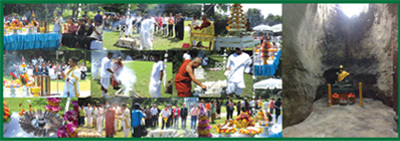
Born into a poor family, he first entered religious life as a Brahmanical ascetic, studying mantras and esoteric knowledge, before later ordaining as a Buddhist monk. He eventually received the ecclesiastical title Phra Khru Palat Eknarin Khamphiro and became abbot of Wat Ban Kaset Thung Setthi in Roi Et Province. Although comprehensive biographical details such as his exact birth year or birthplace are not widely documented in mainstream sources, amulet circles consistently describe him as a forest-tradition practitioner deeply devoted to Vipassana meditation and highly skilled in mantra-based disciplines. His sacred objects are therefore believed to emphasize charm, loving-kindness, prosperity, invulnerability, and protection. Consecration Rituals and Ceremonial Context The consecration of the Phra Rahu Kham Duang amulets took place during a Maha Phutthaphisek ceremony at Wat Ban Kaset Thung Setthi, with Luang Pu Nen Gaew presiding. The ceremony was held on Saturday, 31 March 2012, and included the invitation of respected monk-masters from the northeastern region of Thailand to participate in the empowerment rites.


 Rituals performed during the ceremony included communal chanting, meditative empowerment, the casting of sacred metals, the recitation of Rahu mantras, and traditional Buddhist protective verses. These rites were conducted according to ancient ritual frameworks with the intention of enabling the amulets to support destiny, transform misfortune into benefit, and strengthen prosperity and compassionate influence. Saturday was chosen as an auspicious day according to Thai astrological belief, and the timing was regarded as especially potent due to its alignment with significant calendrical factors of that year. Reports and announcements from the time indicate the participation of several well-known northeastern monk-masters, such as Luang Pu On Yanasiri of Wat Si Chan Kaew, Loei Province; Luang Pho Khan of Wat Mai Mueang Pathum, Yasothon Province; and Luang Pho Thongkham of Wat Tha Thong, Khon Kaen Province, among others. 


While full official confirmation of every participating monk varies by source, these figures are representative of the type of senior ritual specialists customarily invited to major consecration ceremonies. Additional rites included the casting of Buddha images, the blessing of holy water, teacher-honoring rituals, and overnight chanting, all intended to imbue the amulets with auspicious power. Materials and Variants of the Amulet The Phra Rahu Kham Duang, Barami Pu Chao, Wai Khru 2555, was produced in multiple materials and sizes, suitable both for wearing and for altar display. 

Documented variants include white metal alloy, satin-finished bronze, ancient-style silver alloy, enchanted metal alloys, and powdered materials made from coconut shell, both plain and gold-leafed. Production numbers varied by material, with limited editions issued for certain premium versions. The design typically depicts Rahu holding or eclipsing the Moon, in accordance with classical iconography, sometimes represented as a half-moon behind the visage of Rahu. Many versions feature takrut talismans embedded on the reverse, and in certain materials, three silver takrut are included to enhance prosperity-related qualities. 

LP Naen


Some versions also bear a Garuda emblem on the back, symbolizing elevated destiny and sovereign power. Promotional materials describe the powdered versions as containing specially prepared esoteric substances, said to include legacy materials associated with old hermit lineages, emphasizing luck and attraction. Metal versions are described as durable and suitable for everyday wear. Collectively, the amulets are promoted as aids for prosperity, commercial success, destiny support, the mitigation of inauspicious astrological periods, and the transformation of adversity into opportunity. In addition to the Phra Rahu Kham Duang, some sources note that other sacred objects were released alongside the Wai Khru set, such as Pu Chao Saming Phrai figures, Reusi Ta Fai images, and other ritual icons. 


However, the Rahu amulet remains the central focus of the Barami Pu Chao Wai Khru 2555 series. Life and Practice of Luang Pu Nen Gaew Khamphiro Luang Pu Nen Gaew, formally titled Phra Khru Palat Eknarin Khamphiro, is associated with Ban Thung Setthi in Roi Et Province and is said to have studied religious doctrine and hermit-based esoteric disciplines from a young age. He is widely regarded as a monk of the forest tradition who integrates Buddhist practice with ancient Brahmanical-hermit knowledge. His expertise in the Sarika Pak Dee tradition is frequently cited as a defining aspect of his spiritual reputation. Beyond his role as abbot, he has served as a spiritual guide for practitioners seeking counsel on prosperity, relationships, and livelihood. 

He is also credited with composing and transmitting mantra formulas intended to cultivate eloquence, attraction, and benevolence, particularly the Sarika Pak Dee chant, which is believed to enhance mercy and personal magnetism. For these reasons, Luang Pu Nen Gaew has earned widespread respect among lay devotees and amulet collectors, especially in northeastern Thailand. His work represents a synthesis of Buddhist, Brahmanical, and hermit traditions, expressed through ritual practice and the creation of sacred objects emphasizing charm, fortune, and protection. 


While most available documentation focuses on the ritual context and attributed qualities of his amulets rather than detailed personal biography, his standing as a respected ritual master and inheritor of esoteric lineages is consistently affirmed by those familiar with his work.Pra The Phra Rahu Kham Duang, Barami Pu Chao, Wai Khru 2555 amulet of Luang Pu Nen Gaew Khamphiro represents a convergence of ancient Rahu mythology with the charismatic and prosperity-oriented practices of the Reusi Ta Fai tradition. Consecrated in a major ceremony under the guidance of the principal master, the amulet is intended to confer benefits related to wealth, attraction, mercy, and protection, while supporting and stabilizing the wearer’s destiny.
Produced in a wide range of materials and formats, the amulet series reflects an inclusive approach, allowing devotees to choose according to their means and faith. Drawing upon Rahu’s dual nature as both bringer of trials and bestower of transformed fortune, the Phra Rahu Kham Duang of the Barami Pu Chao Wai Khru 2555 series stands as a comprehensive embodiment of ritual belief, cosmology, and devotional practice as understood within contemporary Thai amulet culture.

Featured Master - LP Simpalee

Luang Por Simpalee, a highly revered monk, was known for his profound spiritual abilities and compassion. One of his most notable practices involved the invocation of powerful protective and prosperity-enhancing magic on amulets. These incantations included Maha Lap, Maha Sanaeh, Maha Pokasap, Metta Mahaniyom, and Klaew Klaad. 

Luang Por Simpalee

Luang Phu Simpalee is the living Master of this Lineage, with direct Initiation through the hand of Luang Phu Mun. The Forest Tradition of Tudong was in fact actually not even really a dogma, for it is better denominated as an applied method of practice, more than a method of philosophy, or philosophising. This is perhaps one of the only last remaining Masters living memory whose direct lineage transmission from this era of masters, who are the most famous in the History of Thai Bhuddhism, Thai Amulets,and Buddha Magic.

Below, the Biography of LP Simpalee, now more than 117 as stated when published, still living at time of publishing this post, age 122 Years Old

The Great and Ancient Forest Monk, Luang Por, is a figure of profound spiritual power and focus. His presence is not marked by flashy fireworks or dazzling special effects, but rather by an intense aura of magical energy. In his customary silent and introspective manner, Luang Por has the uncanny ability to block out the world around him, focusing his entire being inwardly. This intense concentration serves as a conduit, channeling the streamflow of the Buddhas' power.

With extreme focus, he invokes and raises these powers, transmitting them outwards. The amulets he creates and infuses with this energy become vessels of immense spiritual significance. They are embedded with the power of the Buddhas' accomplishments, as well as the sorcerous incantations that Luang Por himself has mastered. Each amulet, therefore, becomes a tangible symbol of spiritual strength and a testament to Luang Por's profound connection with the spiritual realm.

Each of these incantations served a unique purpose. Maha Lap was believed to bring good fortune, Maha Sanaeh to attract favor and charm, Maha Pokasap to increase wealth, Metta Mahaniyom to foster loving-kindness, and Klaew Klaad to offer protective barriers. By performing these rituals, Luang Por Simpalee aimed to alleviate the sufferings of the material world for his devotees, offering them solace, protection, and the potential for improved circumstances.


9 Kings 9 Sangkaracha Monks Thai Coin Amulet Luang Por Mui

Rian Gao Sangkarach Gao Rachagarn Suwannabhumi Witayalai Commemorative Coin: 


A Thai Royal Amulet of Historical Importance. Luang Por Mui of Wat Don Rai The Rian Gao Sangkarach Gao Rachagarn Suwannabhumi Witayalai coin is a highly sacred and revered Thai amulet of national and historic importance. Commissioned by Luang Por Plueang of Wat Suwannabhumi, this coin features nine high Sangha monks and the first nine kings of the Chakri Dynasty. Luang Por Plueang invited the great Luang Por Mui of Wat Don Rai and various other masters of the time to assist in the empowerment of the amulets.


The Royal Figures Depicted on the Coin On one face of the coin;
The nine kings of the Chakri Dynasty are featured. They are: Pra Jao Prohm Maharach Pra Jao Meng Rai Maharach Por Khun Ramkamhaeng Maharach Pra Jao U-Tong Maharach Pra Naresuan Maharach Pra Narai Maharach Pra Jao Thaksin Maharach Pra Putta Yord fa Jula Loke Maharach Pra Bpiyamaharach On the other side of the coin, the nine Sangkaracha monks are depicted. They are: Somdej Pra Sangkarach (Sukh Gai Thuean) Somdej Pra Maha Samana Jao Grom Pra Bparamānuchit Chinoros Somdej Pra Maha Samana Jao Grom Prayābovoresariyālonkorn Somdej Pra Maha Samana Jao Grom Pra Yaw Chinayānawārōros Somdej Pra Sangkarach Jao Pra Jao Vorawongs Ter Somdej Pra Sangkarach (Pae) Somdej Pra Sangkarach Jao Grom Luang Vachirayānawongs Somdej Pra Sangkarach (Plod) Somdej Pra Sangkarach (Yoo).


Purpose of the Creation of the Amulet 


The purpose of creating this amulet was to commemorate the building of the Roeng Rien Suwannabhumi Witayalai Dhamma College for teaching the Pariyatti Dhamma to Buddhist monks. The amulets were released in the year 2505 BE and were handed out to devotees for a mere 2 Baht donation. This led to the amulet being known as the ‘Pra Sorng Baht’, meaning ‘2 Baht Buddha’. The Buddha Abhiseka Ceremony included the presence of the following Master Monks: Somdej Sangkarach Pha (Wat Pra Chetupol) Tan Jao Khun Sawai (Wat Ban Krang) Luang Por Plueang (Wat Suwannabhumi) Luang Por Mui (Wat Don Rai) Luang Por Dam (Wat Nor) Luang Por Dtaem (Wat Pra Loi) Luang Por Ort (Wat Sala Khaw) Luang Phu To, of Wat Lard Tarn.

Chao Khun Nor Thai Monk Amulet Blessed by the Great LP Tim

Rian Jao Khun Nor Nor Wor Mor Dork Bua 2 Khang 2515 BE School Building Edition, Blessed by the Great Late Luang Phu Tim Issarigo, of Wat Laharn Rai, in raytong (world famous for his Pra Khun Phaen Pong Prai Kumarn amulets) This is an extremely fine example of the Rian Roop Khai BE Guru Monk Coin amulet, in Nuea Galai Tong, from the 2515 BE Edition, In the image the Great Chao Khun Nor, an Arya Sangha Monk of Historical Importance, who maintained a perfect, exemplary, and admirable trajectory of practice in his Patipata as a Buddhist Monk. The "Thammawitakko Pikku" amulet encapsulates the essence of Chao Khun Nor's teachings, offering wearers a tangible link to his spiritual wisdom. As we delve into the intricate details and symbolism of this sacred talisman, we come to appreciate not only the craftsmanship behind it but also the profound spiritual journey of the revered monk, forever immortalized in the divine elegance of this extraordinary amulet.

Phra Buddha Chinarat Indo-China War Amulet 2485 Wat Suthat

The famous Buddha Chinarat Indo China War Ceremony Buddha Coin, blessed during various empowerment ceremonies for release to protect the military during the dangerous situations in which the soldiers of Siamfound themselves in.
Buddha Chinarat Thai Amulet
The Putta Samakom Thai Buddhist Society gave permission to make and empower these amulets, which were released at Wat Pra Sri Ratana Mahatat in Pitsnuloke (where the original Chinarat Buddha is installed within the Uposatha Shrineroom). The amulets werre released after final Buddha Abhisekha ceremony, in the year 2485 BE. The Buddha Chinarat is world famous for its Klaew Klaad, and Kong Grapan Chadtri Miraculous Powers. 👌😇


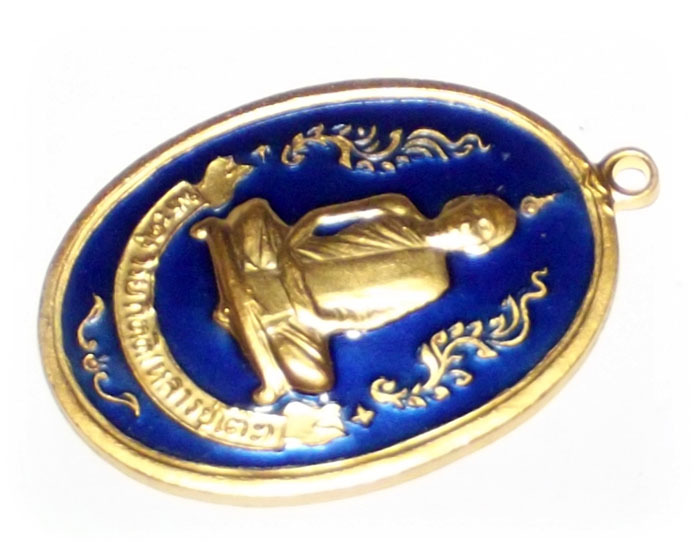
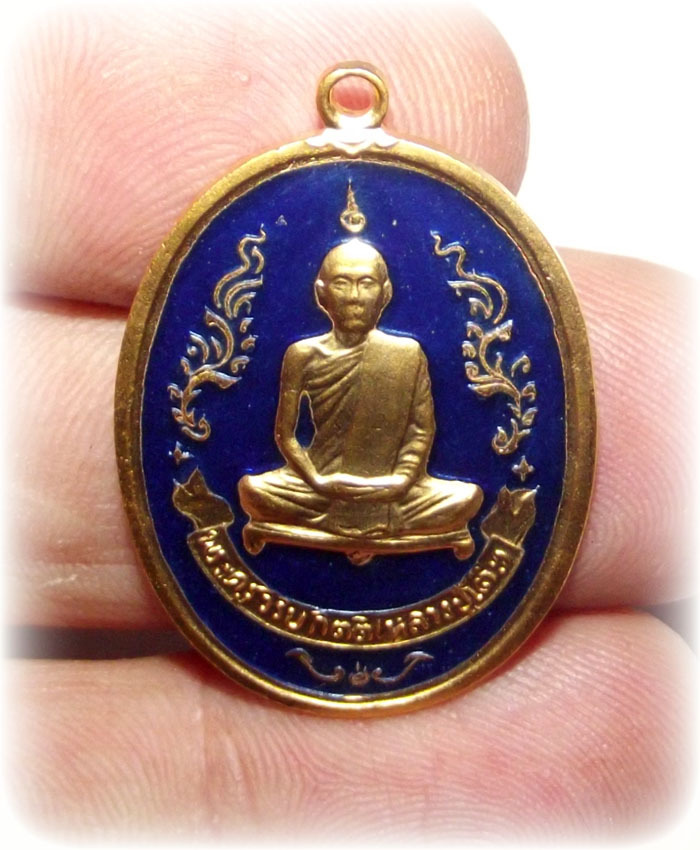
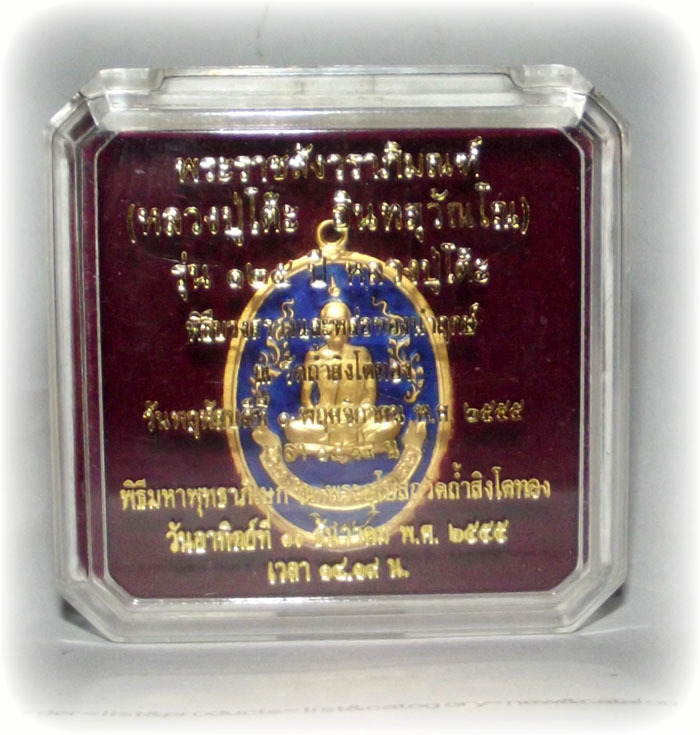
An extreme limited, 125th Anniversary edition coin amulet. reproducing the Eternally Classic Pim Niyom 'Roop Khai' oval shaped coin amulet, with the image of Luang Phu To, of Wat Pradoo Chimplee. This Pim (model), is made from Ancient Temple Bell Brass Sacred alloy, with gold plating, and a luxurious Royal Blue Rachawadee Enamelled Glaze. 

>

The Front face of the amulet features Luang Phu To in a replication of the 2510 Be Edition coin amulet, which is seen to grace many a hardback amulet encyclopedia or expert catalogue. Luang Phu To is arguably one of top Ten Thai Guru Masters of the Last Century. This edition is now also a rarity after the years since its release, especially due to the extreme limited numbers made of each model. This amulet was made in numbers of 1499 Amulets made in this particular version.

Rian Yorn Yuk Roop Khai LP To Wat Pradoo Chimplee

The coin is a Nostalgia Piece Memorial Replica of the 2510 'Rian Roop Khai Luang Phu To Wat Pradoo Chimplee Run Taek' First Edition coin amulet, now worth tens of thousands of dollars, if at all findable. This edition is now also a rarity after the years since its release, especially due to the extreme limited numbers made of each model. This coin was made in numbers of 1,499 Amulets made in this version. 

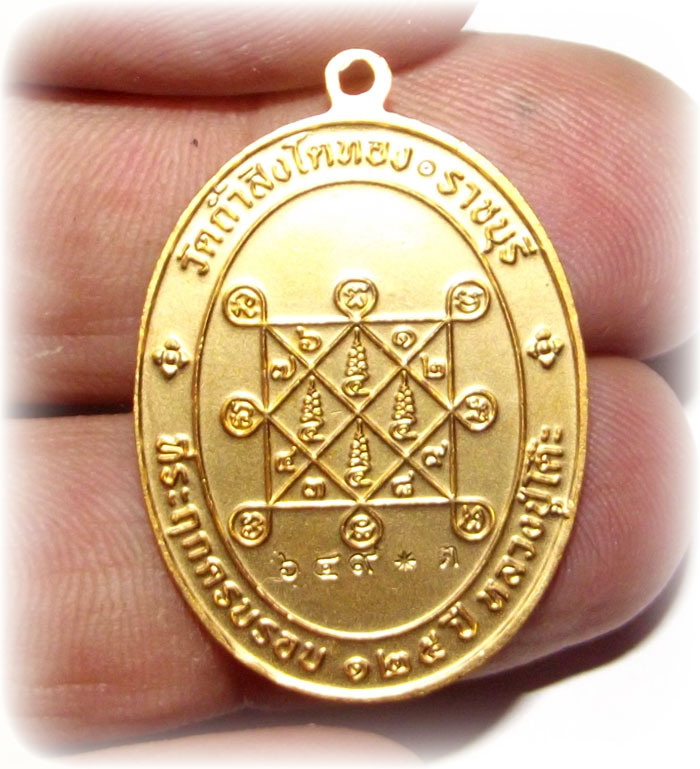
Sacred Yant on the rear face of Rian Roop Khai Luang Phu To

The edition included some Immensely Sacred and Beautifully cast Bucha Images of Luang Phu To of Wat Pradoo, Pat Yod, some Lor Meg 2521 BE Replica round shape coin amulets, and these Ultra Classic and Collectible 2510 BE 1st Edition Replica Monk Coins.

Most eminently eyecatching and attractive also in this edition, were`some Classic Pra Pid Ta Amulets made by direct Looksit of Luang Phu To and most visibly using the Authentic design, Wicha, Yant, and Sacred Powder mixture exactly as those made by Luang Phu To Himself, which indeed they replicate in honor of him.

Thai Buddhist Amulets

the front face features the image of Luang Phu To in Cameo relief with an Image of LP To. The coin itself is made from 'Nuea Tong Rakang Chup Tong', a mixture of Sacred Ancient Temple Bell Brass, Yantra Foils, and Brazen artifacts smelted together into. one Sacred Muan Sarn Ingot, inscribed with Buddhist Incantations in Khom Agkhara lettering, and then resmelted into the form of these coins.

The coin's casting method used, as was the case with all amulets in this Classic and Historically Important edition, the Traditional Olden days method of making amulets. The olden days casting, cutting, pressing and smelting methods are much more painstaking, difficult to control the results, which is however, also part of the Charm of ancient amulets, that no edition was ever completely uniform in the exterior finish of each amulet, making each amulet possess its own personal charm, texture, and tone.

The Rian Roop Khai were made in 4 different finishes, Nuea Tong Daeng Rom Dam (Black Oiled surfaced copper), 'Nuea Tong Daeng Nork Chup Tong Long Ya Rachawadee Si Ngern' (Copper with gold plated surface and enamel glaze), Nuea Tong Khaw (Ancient Silver alloy), and Nuea Nava Loha Ongk Tong Kam (Nine Sacred Metals with Gold Image). A few solid silver and solid gold amulets were possibly (probably made) for the Gammagarn Sponsors, but were neither advertized, nor available.

The smaller, rounded Rian Lor Meg coins were made in 2 different Sacred Metal alloys, 'Nuea Rakang Gao' (Ancient Temple Bell Brass) and 'Nuea Nava Loha' (Sacred metals). This series of amulets were made at Wat Tham Singto Tong Luang Phu To Lineage temple, in honor of the Kroo Ba Ajarn and Lineage Master who passed on both Wicha pra Pid Ta, and some of his famous Sacred Powders to the Looksit who are now the Masters of Wat Tham Sing To Tong, which is considered as one of the top three 'Family relations' Temple of Luang Phu To (Wat Pradoo Chimplee)

This 125th Anniversary edition of Master Class Memorial Amulets for the Avid devotee and Collector of the Luang Pu To Pantheon of amulets, these are destined to enter the History Books as a Classic, and one day immensely rare to find edition of amulets.

The rear face has the Yant Trinisinghae on the back, so famously used by LP To

Thai Buddhist Amulets

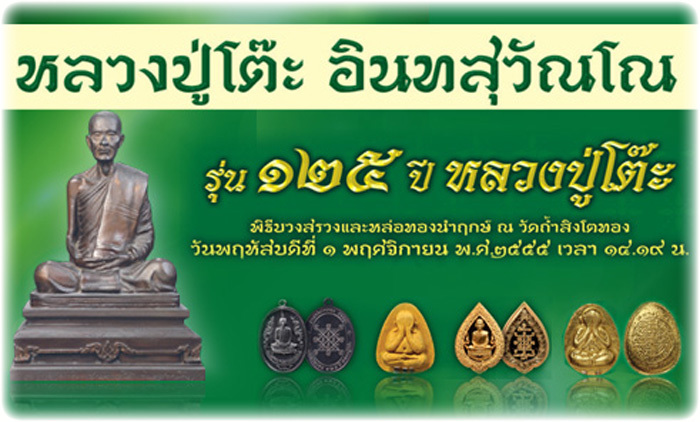
The reason for this Auspicious Edition was to Celebrate the 125th Anniversary of Pra Racha Sangworapimon 'Luang Phu To Intasuwanno Thaera', of Wat Pradoo Chimplee ( 27 March 2430 BE – 5 March 2524), which was sponsored by the Look Sit (Devotees) of Luang Phu To of the district of Ban Jom Beung, in Collaboration with the Temple of Wat Tham Sindgto Tong (Temple of the Golden Lion).

The edition is so that We can Remember the Merits and Great Patipata (Diligent Practice) of the Great Master Luang Phu To, and to think back to the Time when he was alive and remember his Great deeds. The amulets and Bucha statues were made to give to the Devotees who made Merits during the great Celebration of the Anniversary, and most of the Edition was snapped up directly at the Temple after the Ceremony.

Luang Phu To was a Great Monk whose practice was said to be very full of Grace and Auspicious Merit, Generosity and Purity, Diligence and Effort. Thai Buddhist People have Great Faith In Luang Phu To, and many different models of his amulets are found amongst those in the list of Miracle Amulets of Great Fame. His amulets are amongst the most sought after of the 'Chan Yord Niyom' Category (Top Class High End Collector Class Amulets, only accessible to the most Wealthy

The Pra Pid Ta Hlang Yant Duang Boran and Hlang Na Duang Boran, are perhaps one of the top 5 sought after amulets of all Thai Amulets, The Rian Pat Yod Boran, The Rian Roop Khai Boran, and of course the small round 'Rian Lor Meg' amulet. His Pra Somdej 13 Pim first edition amulets are also now becoming ever rarer and extremely expensive to afford.

Thai Buddhist Amulets

His Pid Ta amulets have many different Pim and made both at Wat Pradoo, and also at smaller temples in smaller editions, some of which are affordable and others which are most difficult to afford, for their rarity, miracle tales, and popularity.

Luang Phu To was the Abbot of Wat Pradoo Chimplee from 2546 BE to 2524 BE, for over 68 Years, until his passing. The Temple of Wat Pradoo is since then till now attended to and presided over by his successor,Pra Kroo Wirote Gittikun .

The Rian Roop Khai Yorn Yuk 2510 Luang Phu To comes with original box from the temple of Wat Tham Singto Tong.

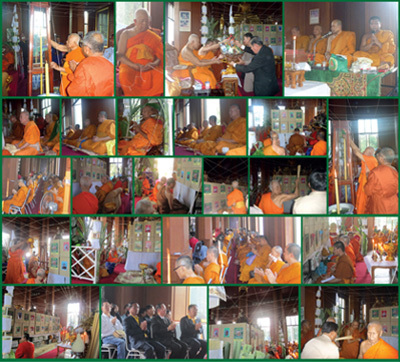
125 Monks were present to Chant the Buddha Abhiseka and Bless this 125th Anniversary Edition range of statues and amulets.

Thai Buddhist Amulets