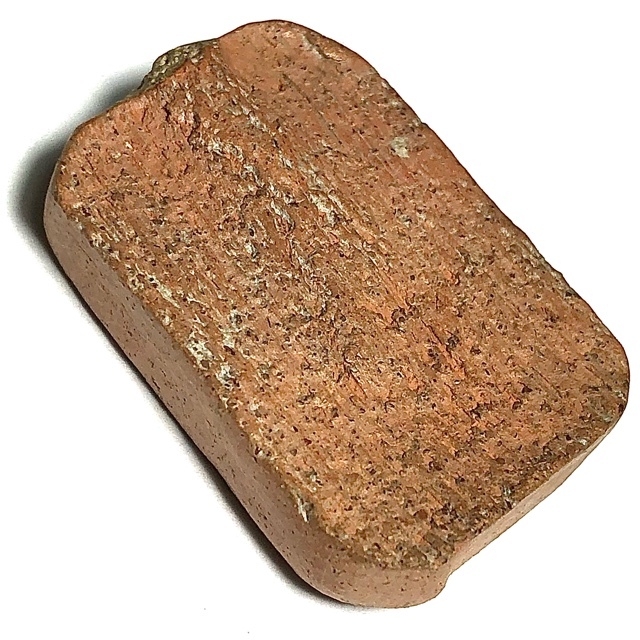
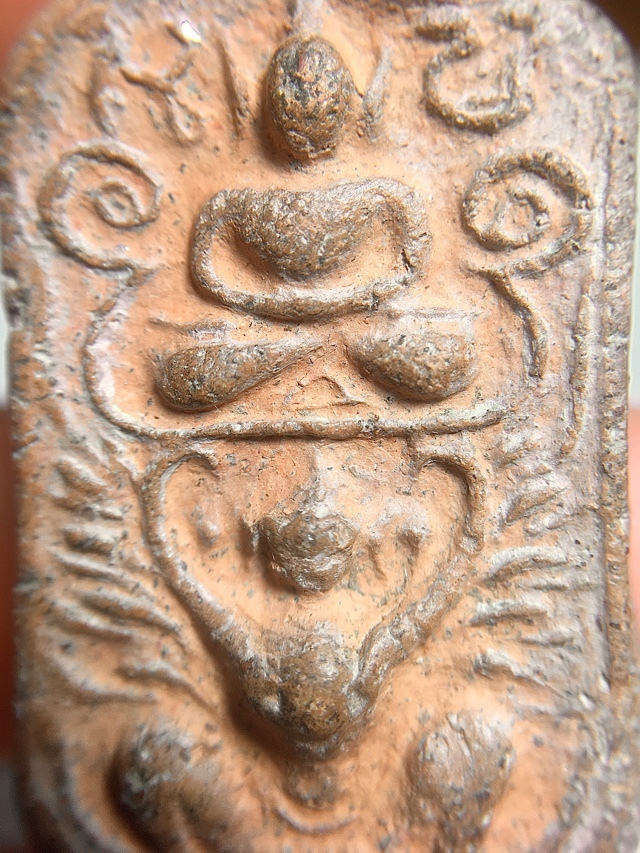
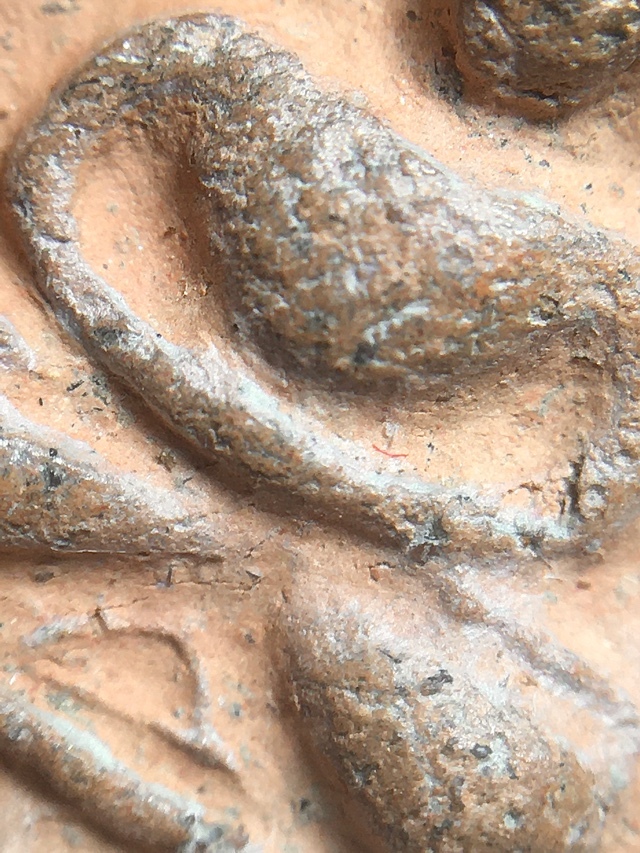
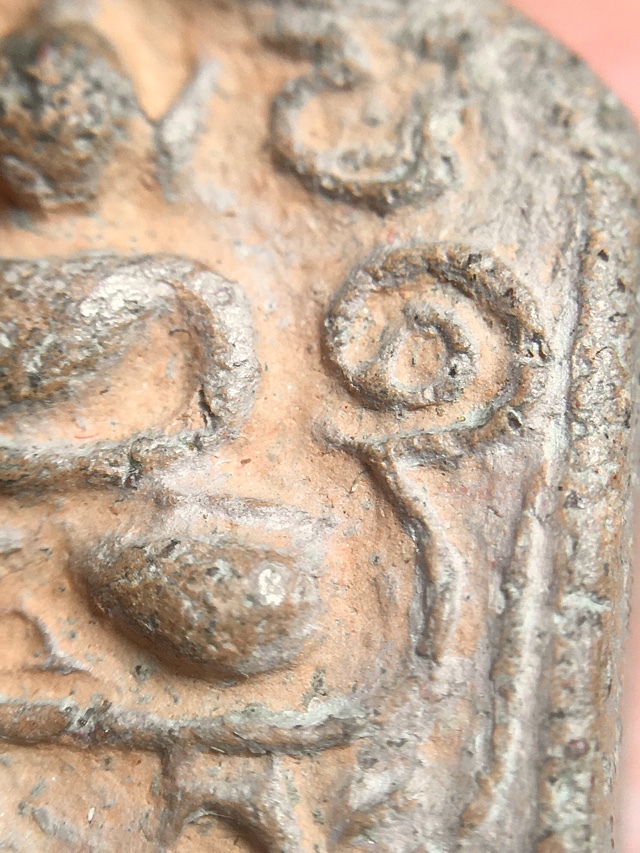
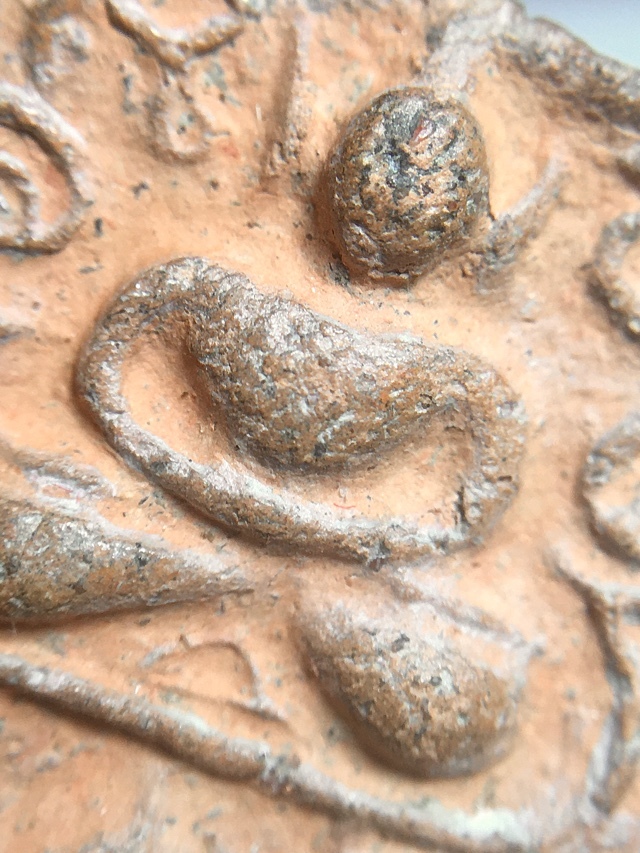
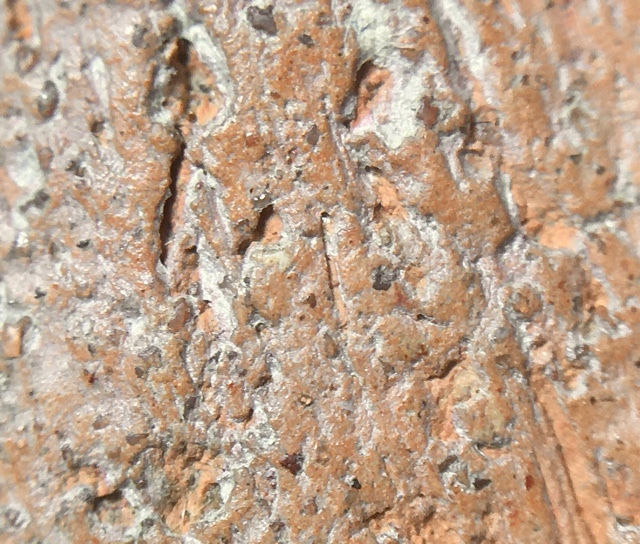
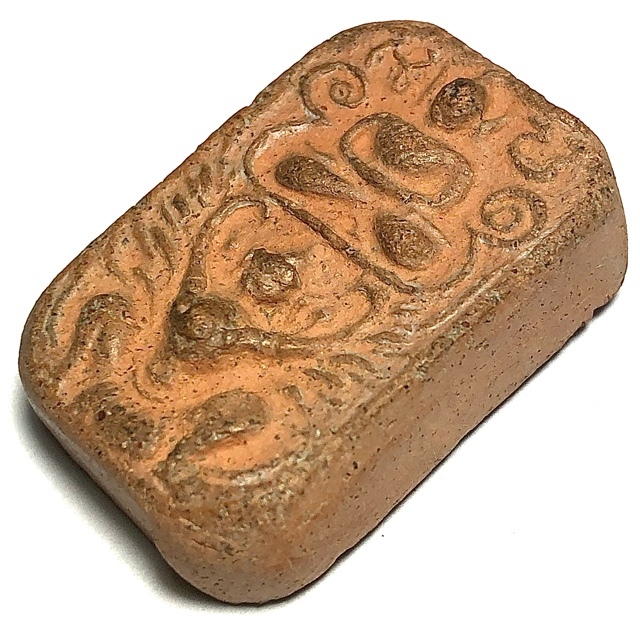
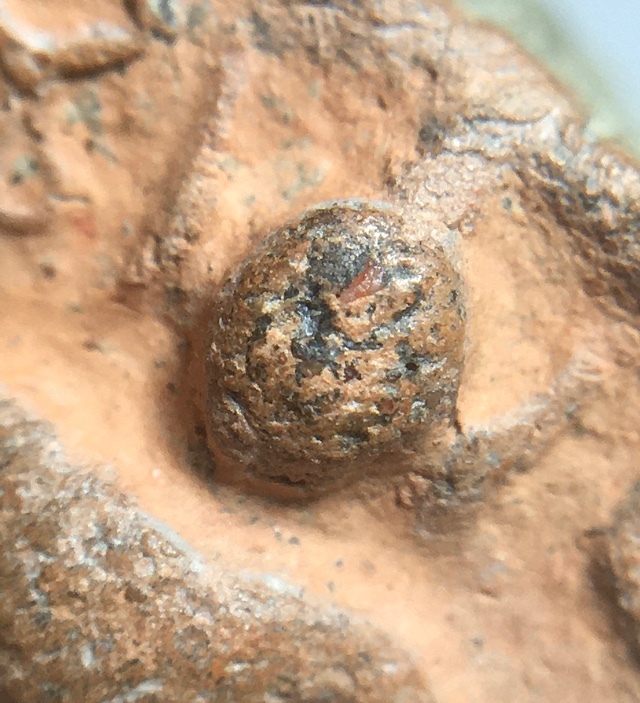
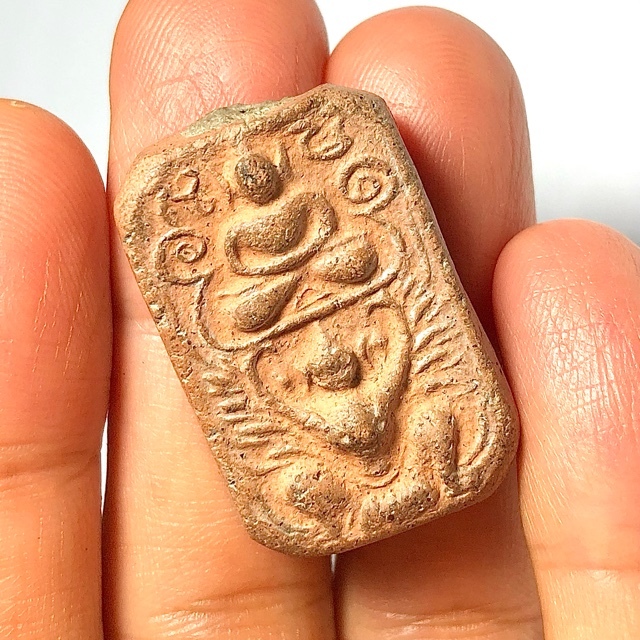
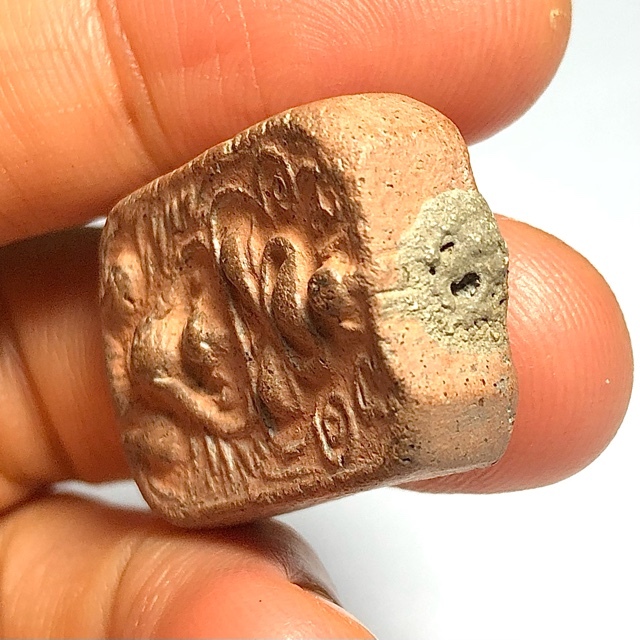
The Phra Rahu Mongkol Baramee Gae Pee Chong edition amulet of 2564 BE, blessed and consecrated by Luang Phor Boonma (Phra Kru Sunthorn Chokkorn) of Samnak Song Khao Kaew Thong in the year two thousand five hundred and sixty-four, represents a significant fusion of ancient Vedic cosmology and Thai Buddhist protection rituals. This specific edition was meticulously crafted to serve as a powerful talisman for those seeking to mitigate the influence of "Pee Chong" (unlucky astrological years) and to transform negative energy into prosperity.
The creation process for this edition was grounded in sacred tradition. Luang Phor Boonma, a renowned master of the Prachinburi province, oversaw the selection of auspicious materials, or Muan Sarn. These materials included various "Chanuan" (sacred metallic ores), fragments of ancient amulets, and holy powders, which were gathered from significant spiritual sites.
The Rahu image in this particular series, is thoughtfully designed to portray the deity in a striking pose, often shown engulfing either the moon or the sun. This powerful visual symbolizes Rahu’s ability to “devour” bad luck and obstacles, thereby neutralizing their negative influence on the devotee’s life. During the consecration ceremony—known locally as Phiti Phuttha-Phisek at Samnak Song Khao Kaew Thong, a grand assembly of master monks gathered. They joined Luang Phor Boonma in a solemn chanting session, accompanied by meditative empowerment rites that infused the new shrine with spiritual vigor and communal devotion.
The timing of the ceremony was calculated according to astrological charts to align with the peak energy of Rahu, ensuring that the amulets were imbued with "Ittirit" (supernatural powers) of protection and wealth attraction. This ritual environment served to charge the amulets with the power of Metta Karuna (loving-kindness) and Kong Grapan Chadtri (invulnerability).
According to Buddhist and Brahmanical tradition, Phra Rahu is a powerful celestial deity, the "Lord of the Shadow," and the eighth of the Nine Planetary Gods (Navagraha). His influence is associated with radical change, protection from unseen enemies, and the ability to turn misfortune into fortune. Devotees believe that by honoring Phra Rahu, they can settle karmic debts and clear the path for success in business and personal life. He is particularly revered for his ability to ward off "Athan" (black magic) and malicious spirits.
To properly worship the Phra Rahu Mongkol Baramee edition, traditional masters advise that devotees prepare a special offering of eight or twelve black items—such as black grapes, black coffee, black gelatin, or black beans, each chosen to mirror Rahu’s dark, enigmatic hue and the potent, numerically symbolic power he embodies. The ritual is most auspicious when performed on a Wednesday night, aligning with the deity’s preferred day, or during a solar or lunar eclipse, when celestial energies are believed to be heightened. Central to the ceremony is the chanting of the Phra Rahu mantra, a sacred incantation recited with reverence and intention to call forth Rahu’s protective presence, guiding the devotee through a profound spiritual experience.
“Kina Pan Na Ma Ma, Ya Tha Wat Ta, Su Ga Pi Ya, Ma Ma.”
As Ajarn Spencer Littlewood elaborates on his platforms, such as ThailandAmulet.net, the efficacy of this amulet is deeply tied to the practitioner’s own moral conduct. The Pra Rahu image acts as a spiritual shield, but its true power is magnified when the wearer practices the Five Precepts and maintains a mind of clarity. This two thousand five hundred and sixty-four edition remains a highly sought-after piece for collectors and practitioners alike, standing as a testament to Luang Phor Boonma’s spiritual lineage and his dedication to the welfare of his devotees.
Pra Rahu, occupies a unique and complex position within Thai cosmology, astrology, and ritual practice. Unlike planetary bodies that possess physical form, Rahu is understood as a shadow entity, a force without a tangible body, yet with profound influence over human fate, perception, and karmic unfolding. In both Indian and Southeast Asian traditions, Rahu is associated with eclipses, obscuration, illusion, and sudden transformation. However, within Thai esoteric Buddhism and Brahmanical syncretism, Rahu is not purely malefic. Instead, Rahu represents a dual-natured force that can either obscure or empower, depending on alignment, merit, and ritual engagement.
The mythology of Rahu originates from ancient Indic cosmology. Rahu was once an asura who sought immortality by deceitfully consuming the divine nectar of amrita. Upon discovery, his body was severed by Vishnu, yet because the nectar had already touched his lips, his head remained immortal. This disembodied head became Rahu, eternally chasing the sun and moon, periodically devouring them, which manifests as eclipses. This myth encodes a deeper symbolic structure. Rahu represents insatiable desire, ambition without restraint, and the disruptive force that breaks linear order.
Pra Pid Ta Pong Athi (Pra Pid Ta Graduk Phii) - Pra Ajarn Noo, Wat Po Ta Tian (Wat Chetupon). The Pra Pid Ta was made in various models such as the Pra Pim Pid Tawarn, and the Pra Pid Ta Pim Nang Yong models. Pim Pid Tawarn (Pim Dtern).
The Pra Pid Ta Pong Graduk Phii is a highly sought after amulet for high-power seekers and those who believe in the power of Necromancy, for the Hoeng Prai bone powders used in the making of the amulets. Extremely popular with those who seek protection against physical dangers, soldiers, policemen, and people who have to risk their life in the profession, and also a highly popular amulet with Gamblers and lottery players.
The legendary Pra Pid Ta Pong Athi (Graduk Phii) amulet of Pra Ajarn Noo, of Wat Po Ta Tian, became famous during the second world wartime, as a powerful protector against deadly dangers, and has remained famous to this day.
The fame came from the fact that constant reports of miraculous events came after the release of the amulets, and so many people reported powerful results, that the amulets became an almost instant success. The fact that Thailand was being bombed by the allies increased the number of deadly events, and hence reports of lifesaving miracles with wearers of the amulet, were commonplace.
It was during the second world war and Indo-China wartime era that many powerful sorcerer monks in Thailand began to come out and create amulets to distribute to soldiers and the common folk, to protect them against the deadly dangers of wartime. In that time, the Japanese were occupying Thailand as 'forced allies', and so Thailand was being bombed by the allied nations, who were attacking the Japanese military installations. Very often bombs would miss the Japanese target, and hit a local village instead,n and innocent Thai people were killed. And so it was in this era than we came to see amulets like the Pra Pid Ta Pong Graduk Phii come into existence.
Pra Ajarn Noo of Wat Po Ta Tian (Wat Chetupon);
In the year 2485 BE, Pra Ajarn Noo, of Wat Po Ta Tian (or, 'Wat Pra Chetupon Wimon Mangkalaram'), created a powerful amulet, in secret, and with his own hands, to help people survive the war and prosper in life. This amulet was of course the Pra Pid Ta Nuea Pong Athi, better known as 'Pra Pid Ta Pong Graduk Phii' amulet. Pra Ajarn Noo was a Gaeji Ajarn of Khmer Origins, who possessed powerful Necromantic Wicha. He was not very old at the time, but already had a large following of respectful Devotees, who revered him for his powerful Magic.
Pra Ajarn Noo liked to grow magical herbs around his Kuti Hut at the temple to use for making amulets and potions, holy water and bestowing blessings. Pra Ajarn Noo was often visited by devotees to perform spiritual healings with his holy water and herbal potions, and people would ask him for amulets and blessings. Pra Ajarn Noo hence began making amulets, in a very unusual manner compared to the usual Thai Buddhist Traditional methods, bringing in his Khmer Sorcery to add to the magical power of the amulet.
He used ashes from the bones of cremated corpses, mixed with Puttakun Powders and Ittijae Powders, and Pong Wan Aathan (a mixture of powdered magical herbs and pollens). The use of the ashes of cremated bones in the amulets came from Pra Ajarn Noo's Khmer Necromantic Sorcery training, which holds to the premise that the ashes or bone powders, funereal earths and corpse oils of the dead, possess immensely powerful magic.
The ashes of Phii Dtaay Hoeng were used, according to the Dtamra Saiasart Khmer Grimoires of Necromantic Sorcery, which specifies that only the ashes of a Hoeng Prai Ghost can be used if the Wicha is to be powerful. A Hoeng Prai is often known as a 'screaming ghost' because the word means a person who died in an accident prematurely, or through unforeseen circumstances. So often this will mean a person who died screaming.
Hoeng Prai spirits are in Limbo and often angry, possessing immensely powerful psychic energy. The sorceror appeases the spirit in Limbo by agreeing to a collaborative effort, where the ghost of the spirit in Limbo agrees to use its psychic powers to aid the human who owns the amulet made from its ashes, and accumulate good Karma to achieve eventual release from Limbo. In addition, astrological Necromancy states that a Hoeng Prai Ghost must die on a Saturday and be cremated on a Tuesday, for the full formula of Lucky Fortunes Magic to come into effect.
Pra Ajarn Noo saw to it that he fulfilled all of these Ritual requirements, and gathered the sacred ashes until he had enough to press amulets with them, and mixed them with his other prepared Muan Sarn Sacred Powder ingredients, the Pong Puttakun, Pong Ittijae, and Wan Aathan. In addition, Pra Ajarn Noo then added his special ingredient, 'Wan Pong', or more commonly known as 'Wan Graser'.
Wan Graser is a very rare herbal plant found in the deep rainforests, and is said in Folk Legends to be a bloodsucking 'Vampire' plant. If an animal gets entangled in it, it is said the plant can slowly suck the blood out of the animal until it dies. This herb is a very difficult herb to cultivate, as its true habitat is in the deepest rain forests, but Pra Ajarn Noo had managed to cultivate some around his hut at the temple, and he used them for the making of the Pra Pid Ta Pong Graduk Phi.
In any case, despite the Muan Sarn Sacred Powders used by Pra Ajarn Noo to make the Pra Pid Ta Pong Athi amulets seeming very scary in their natural origins, Pra Ajarn Noo performed appeasement rituals and purification ceremonies over all the individual ingredients of the Muan Sarn Sacred Powders before the amulets were made, and removed any black magick or negative karmic influences and energies from them beforehand, leaving only the pure unstained magical power and energy remaining, to be re-empowered with its new purpose.
The amulets also contain other Muan Sarn Sacred Powders such as broken amulets from Wat Sutat, and Powders from Pra Sangkarach Gai Thuean (maker of the Pra Somdej Arahang), and many other powerful ingredients, such as Camin Dam (black cumin).
The power extracted through Necromancy was then imbued within the form of the Pra Pid Ta amulets, and blessed with Buddhist Blessings of the Buddha Abhiseka (Dhamma Chakra opening of the eyes of the Buddha), empowering the extremely powerful energies within the Muan Sarn Sacred Powders to be able to bring auspicious blessings and strong protective power to keep the wearer from harm, and lead to prosperity and happiness.
The Pra Pid Ta Pong Graduk Phii amulet is renowned for its extraordinary protective powers, particularly for travelers. It's believed that those who wear this amulet will journey safely, free from harm. This is not just a matter of physical safety, but also extends to the social sphere. Interestingly, observers have noted that when a traveler wearing a Pra Pid Ta Pong Graduk Phii amulet disembarks from a vehicle alone, people often ask if the others aren't joining or following them.
This curious phenomenon suggests that the amulet doesn't just protect the wearer, but also seems to create a positive aura around them, making it hard for others to imagine them being alone. This aspect of the amulet is attributed to its powerful Metta Maha Niyom Mercy Charm, which not only ensures the safety of the wearer but also fosters a sense of companionship and goodwill.
Many gamblers have found the Pra Pid Ta Pong Graduk Phii to be an exellent Luck-bringer to turn the tables and odds in their favour, and to 'whisper' in the ear of the gambler to hint as to what bets should be placed. This is known as 'Prai Grasip' Ghost Whisperer Magick. Pra Ajarn gave a rule to gamblers however for this amulet; Namely that 'If your winnings are within reason, you should not push your luck too far'.
The now world famous, and immensely rare, and difficult to find Pra Pid ta Pong Graduk Phii, is a highly preferred amulet with Thai people, especially with those devotees who prefer less subtlety, and the potent magic of necromancy, for a fast acting amulet that emanates Magical Power without restraints, the Pra Pid Ta Pong Graduk Phii is a recommendable amulet, for protection, gambling and general prosperity.
The Pra Pid Ta Pong Graduk Phii is by no means an easy amulet to find these days, and is a very powerful magic amulet of immense fame and renown in Thailand.
The Pra Khao Kam amulet is a renowned Thai Buddhist amulet that has gained worldwide popularity due to its association with Luang Por Lersi Lingdam, an Arya Sangha Guru Master of Wat Ta Sung. This amulet is widely believed to possess miraculous powers, particularly strong power of Lap Sakkara (honorable status, promotion, and wealth), as well as their powers of Metta, Klaew Klaad, and Kong Grapan.
Luang Por Lersi Lingdam was not only a renowned Buddhist but also a master sorcerer, who worked with the great Luang Por Parn of Wat Bang Nom Kho. He was a master of Muan Sarn, the process of creating sacred powders, and was known to make Buddha statues from powdered dried rice from his alms bowl.
According to Luang Por Lersi Lingdam.
Luang Por Parn advised him to keep the first handful of the most delicious meals and empower them with incantations. Luang Por performed this for four months, constantly keeping and empowering the dried rice wherever he travelled. Even if he came to Wat Ta Sung, he had to keep the first handful of the meals and store the Muan Sarn because the Wicha only works if the rice is kept for a period of three months of daily collection.
The Pra Khao Kam amulet is the most well-known amulet associated with Luang Por Lersi Lingdam, and the first edition of Pra Khao Kam amulets was made in 2533 BE, and consisted of 10,000 amulets.
The Pong Puttakun (sacred powder) is visibly risen to the surface, making it recognizably authentic.
The Pra Khao Kam amulet comes in its original box and condition from the temple of Wat Ta Sung. These amulets are highly sacred and believed to bring protection, wealth, and good fortune to those who wear it. Luang Por Lersi Lingdam's amulets are seen as a total surety for a definite result, due to the true and pure practice and dedication of this Olden Days Buddhist Guru Master, whose teachings have led so many lay devotees and ordained Monks to a higher understanding of the Dhamma. His Abhinyā powers are irrefutable by Thai Buddhist people.
In conclusion, the Pra Khao Kam amulet is a must-have for any devotee of Luang Por Lersi Lingdam and is widely believed to bring protection, wealth, and good fortune to those who wear it. The amulet is a testament to the ancient wisdom and power of Thai Buddhist practices, and the legacy of Luang Por Lersi Lingdam continues to inspire and guide many today.
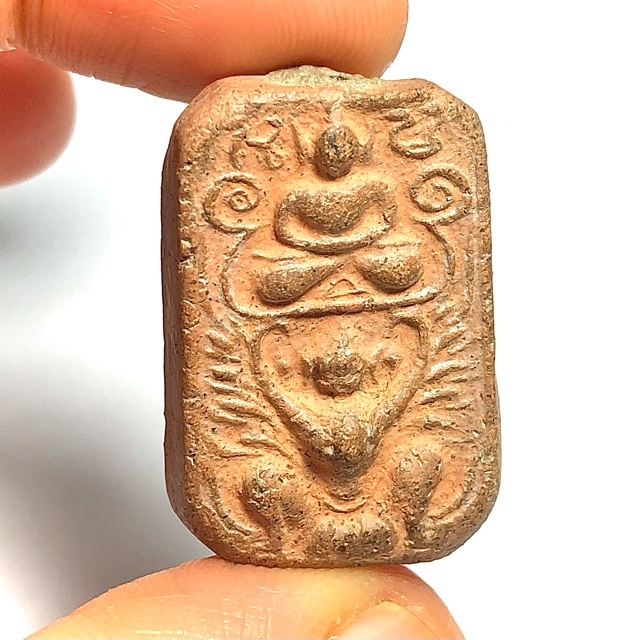
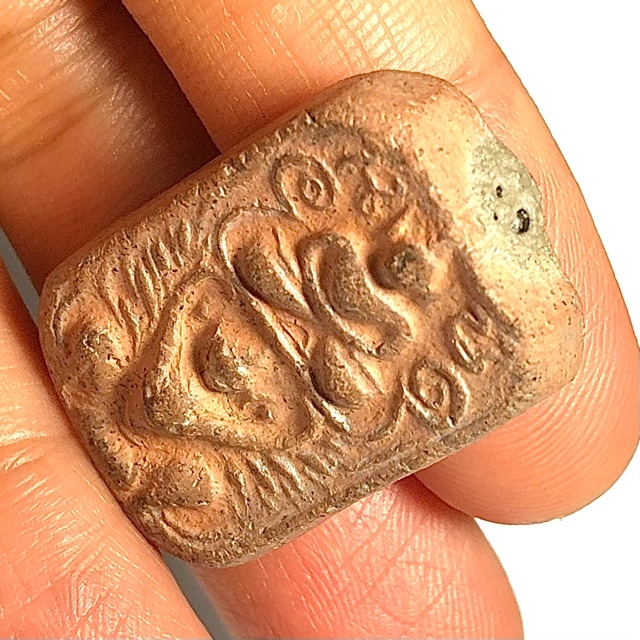
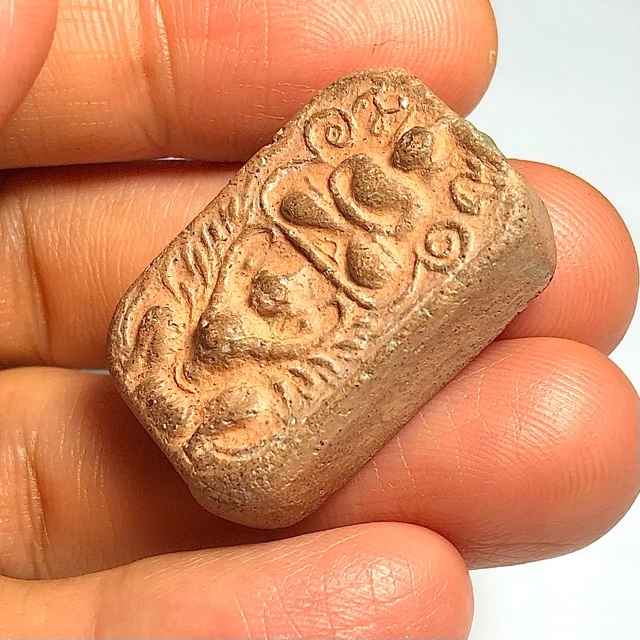
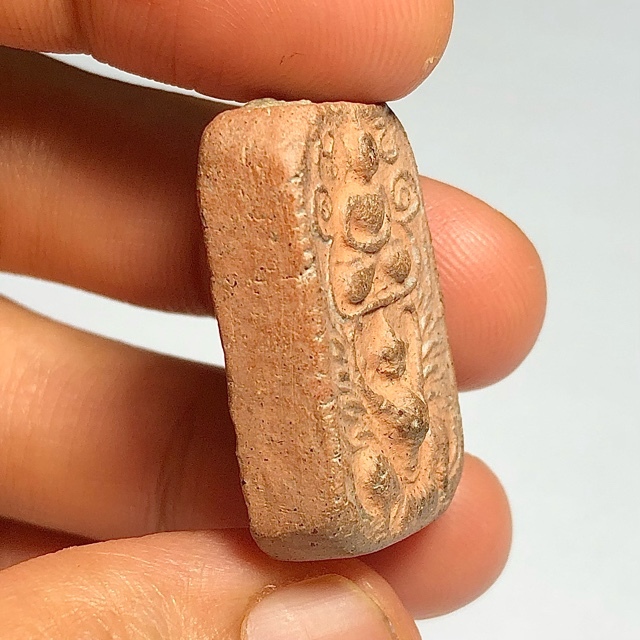
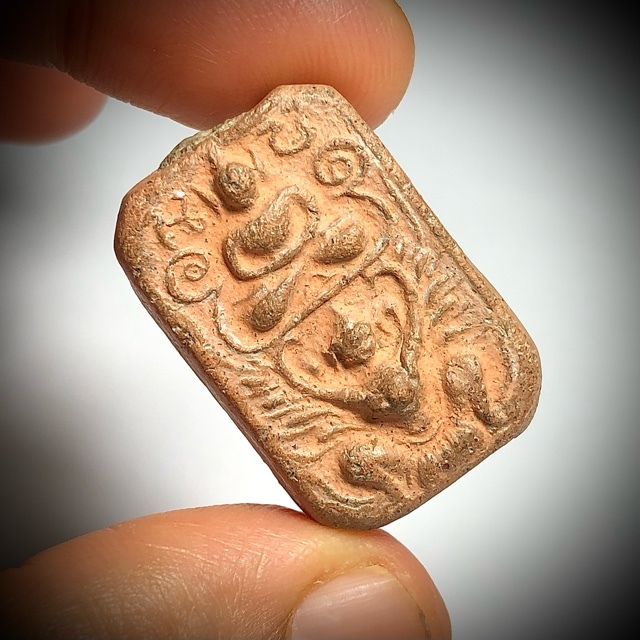
Pra Putta Jao Pratap Sadtw - Pim Song Khee Krut Pim Niyom Yuk Dton, from the Great World Famous Master Monk, Luang Por Parn Sunanto, of Wat Bang Nom Kho (Amper Sena, Ayuttaya). Although official documentation categorizes all of these amulets as 2460 BE, in truth, Luang Por Parn released these famous magical amulets during many years of his life trajectory as a Master Monk, and hence, due to the exhibit having a very aged appearance, one would consider it 'early era', and probably made before 2460 BE.
However, the block press mold reveals it to be of the 2460 BE series, but the age of the clay declares itself to be older, and hence could and probably is, an early era model. This is deducable, because, this block press mold, may, or may not have been created long before the 2460 series, and used along with other block presses. Therefore it is important to study the natural age of the sacred clay, more than the block press mold, in order to deduce which era the amulet came from. This hence demonstrates to the student, that there are many factors to consider, when deciding upon the era of an amulet.
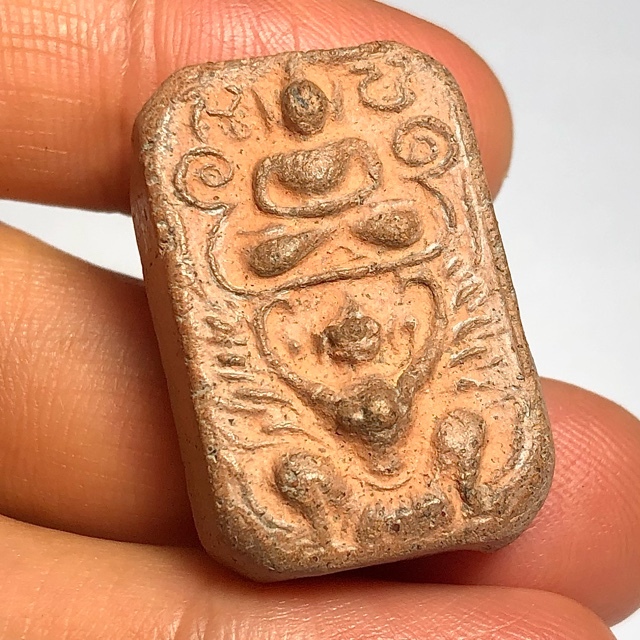
The Buddha riding Garuda amulet of Luang Por Parn, was released in six different 'Pim' (at least those which are accepted as Pra Niyom preferred category amulets). They are found in various colored clays ranging from beige, brown, yellowish-white, reddish brown and terracotta red, as well as dark gray/blackish color.
This amulet is a historic Master Class amulet of immortal fame, and we highly recommend that this amulet should be encased with a form of casing that is worthy and deserving of its eminent status, namely solid silver or gold. Please select the encasement options according to your personal taste and desire.
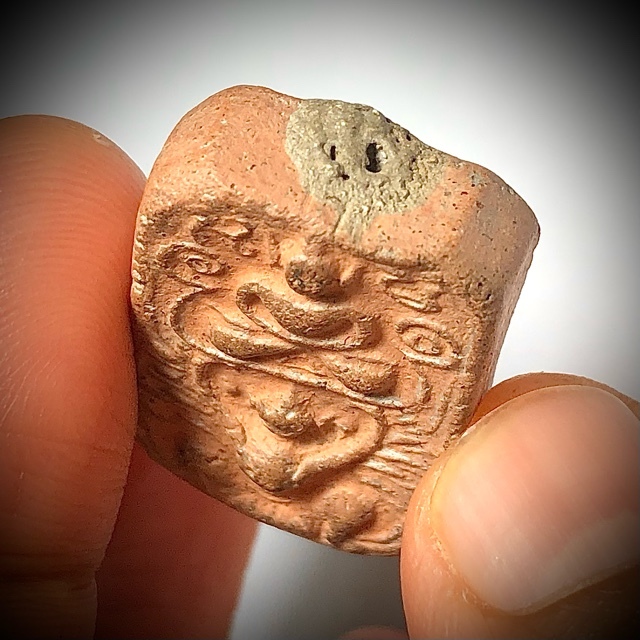
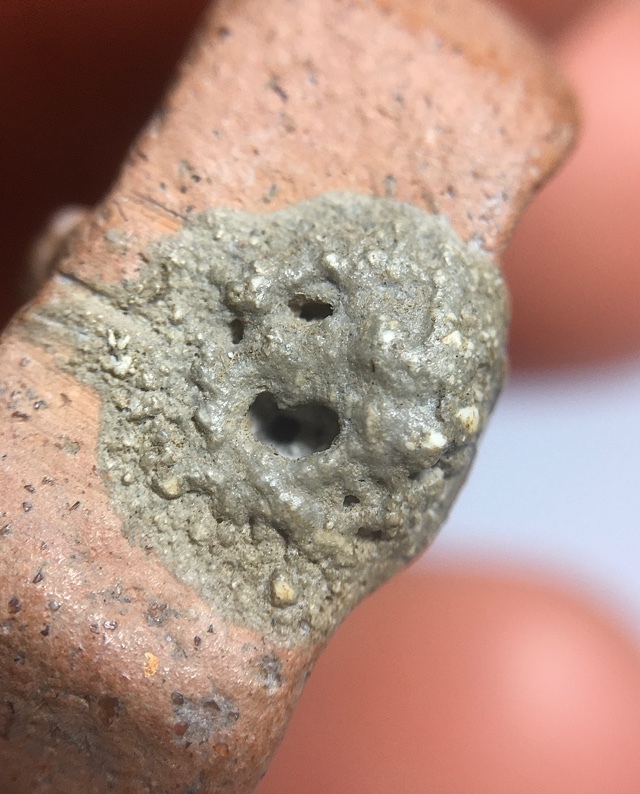
Below, the special Pong Muan SarnYant Grao Paetch with Pong Wised inserted into the cavity of the upper border of the amulet.
There were six different kinds of Animals in the Dtamra of the 'Pra Putta Jao Pratap Sadtw' series of amulets made by Luang Por Parn, which he made after miraculous encounter with the Chee Ba Khaw Apparition who taught him this Wicha. In truth, these 6 models are found in up to 88 different styles, which is a lesser known fact. It is said in Legend, that if you pray to the amulet and chant the Kata of Luang Por Parn for 3 Years, that the Animal will come to life and leave the amulet.
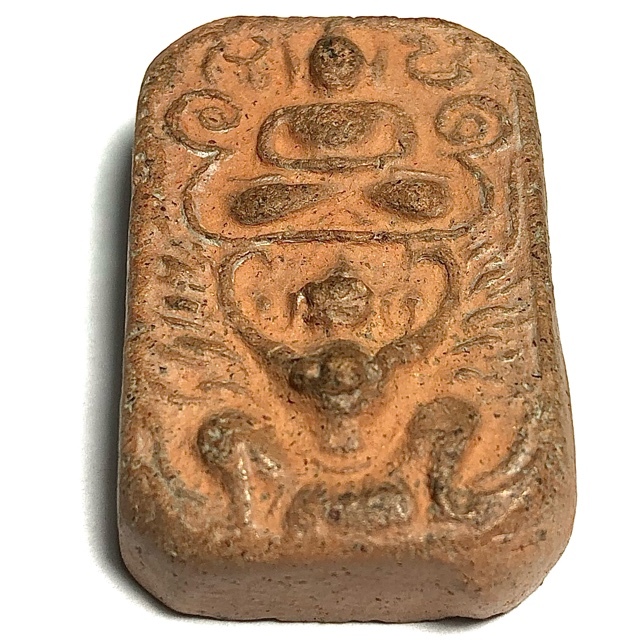
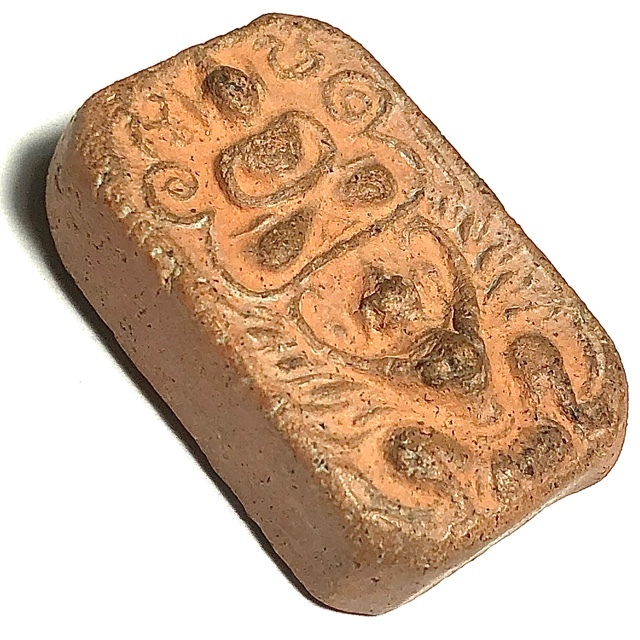
The six different Pim are recognizable through their individual characteristics, the one in this image being the 'Thaan Bua Chan Diaw', which means 'single tier Lotus Dais'
There are some other Garuda and other animal models (all Pim Niyom preferred), but which do not have the petals of the lotus, rather, have single thin curved lines or straight line Dais, such as this Pim Khee Krut Niyom.
Its marks of authenticity, apart from knowing how to recognise the ingredients of the Sacred Powders and Muan Sarn in the amulet, and the signs of aging, are various;
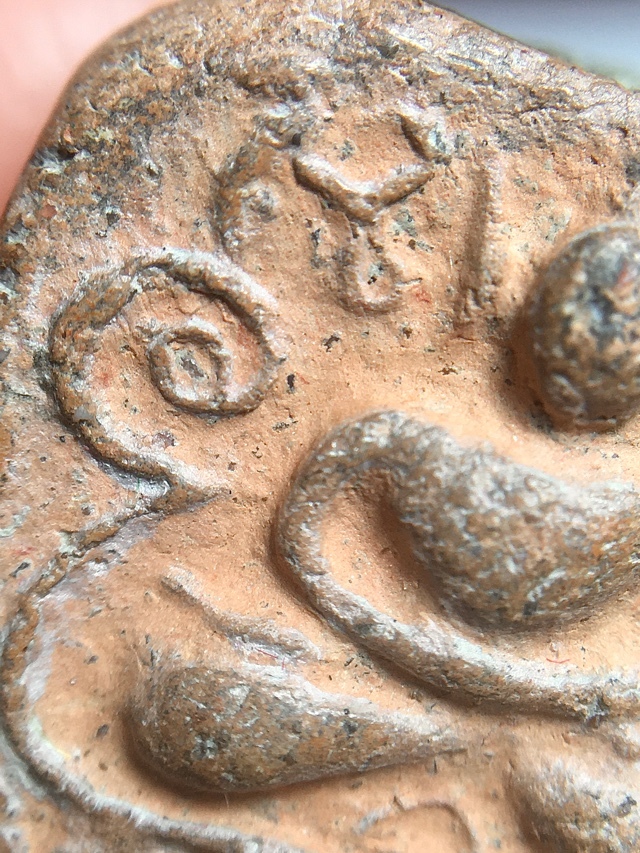
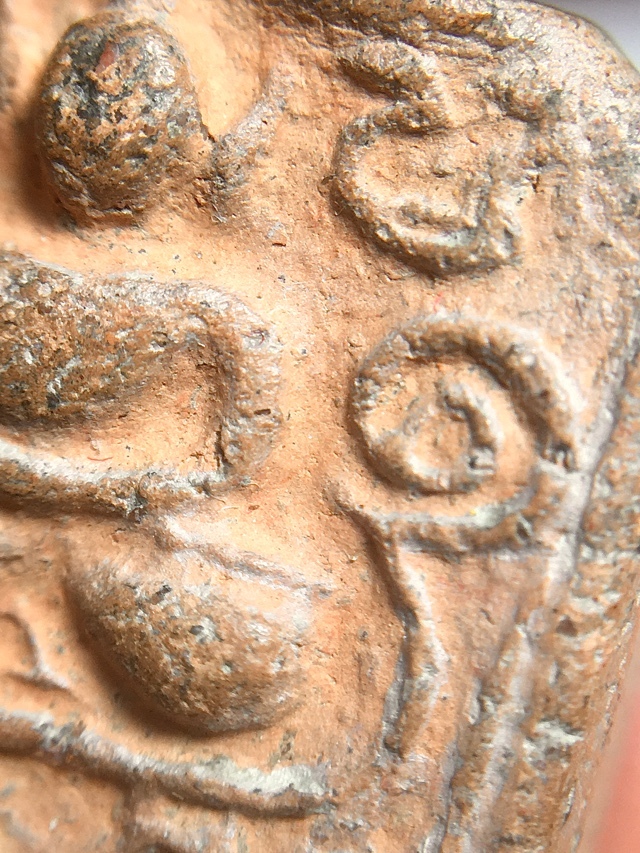
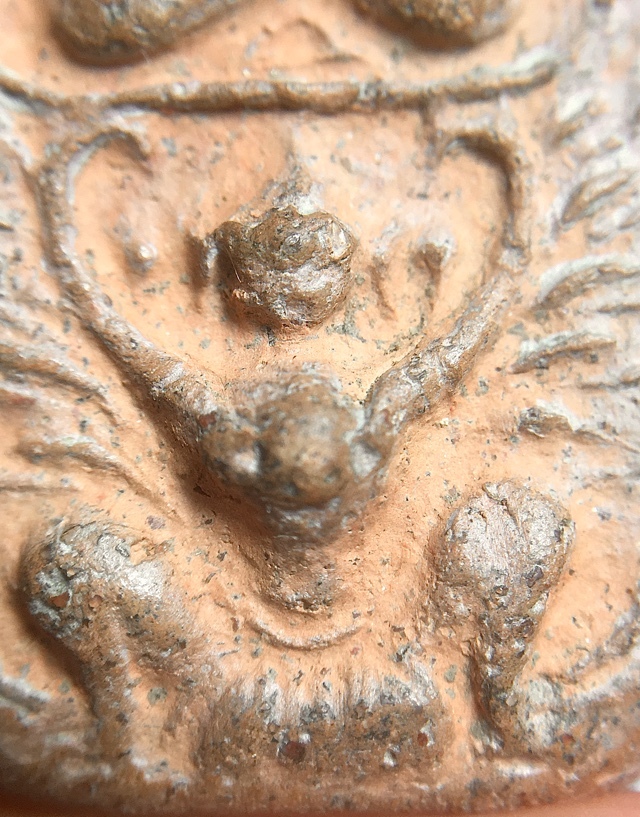
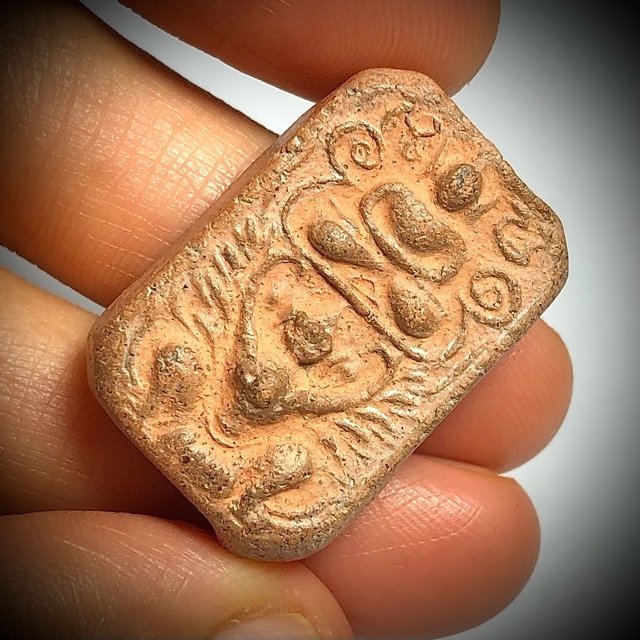
1. The curved lines of the dais rise up to form the Khom 'Unalome' (Letter 'U'), in a circular shape around the Buddha, whose knees have aura-like thin lines
2. There is a small curved dome under the legs of the Buddha, and above the curved Unalome dais that frames him.
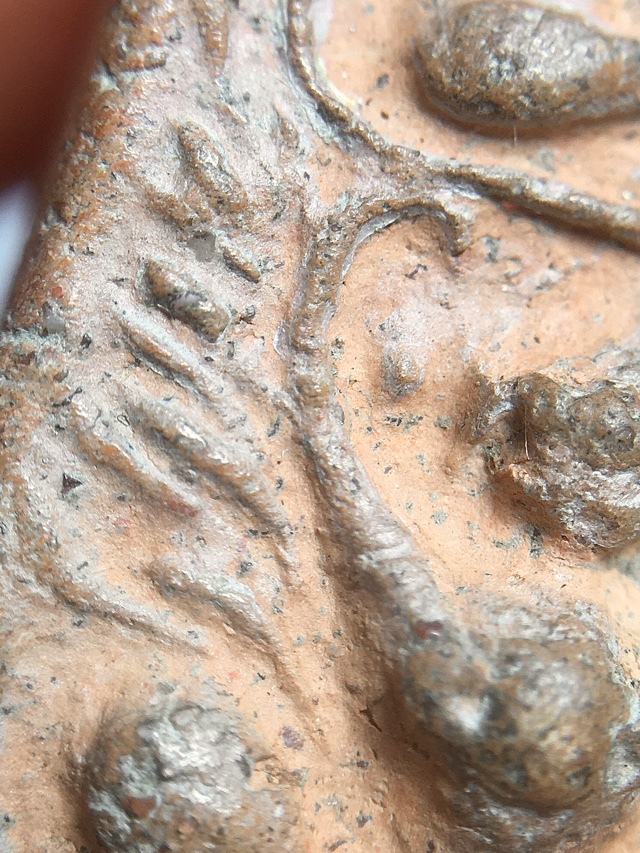
3. To our right side of the Garuda's wings (left wing from Garuda's point of view), a small thin line is seen rising up to connect with the border edge of the amulet.
4. The Khom Sanskrit Letter 'A', above the Buddha's left shoulder, is embossed Backwards, and has to be read in reverse.
5. The Khom Sanskrit Letter 'MA', above the Buddha's right shoulder, is also embossed Backwards, and has to be read in reverse. On this side of the Buddha, the Unalome Dais is also a Backwards letter 'U', reflecting its counterpart twin on the other side of the Buddha image.
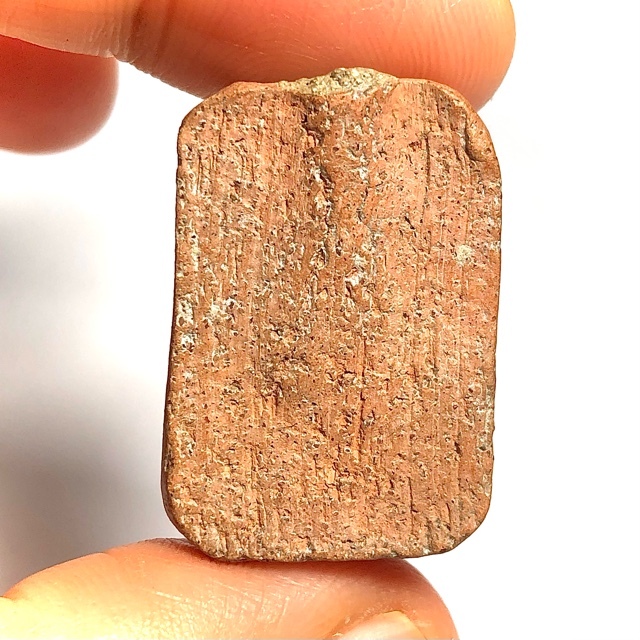
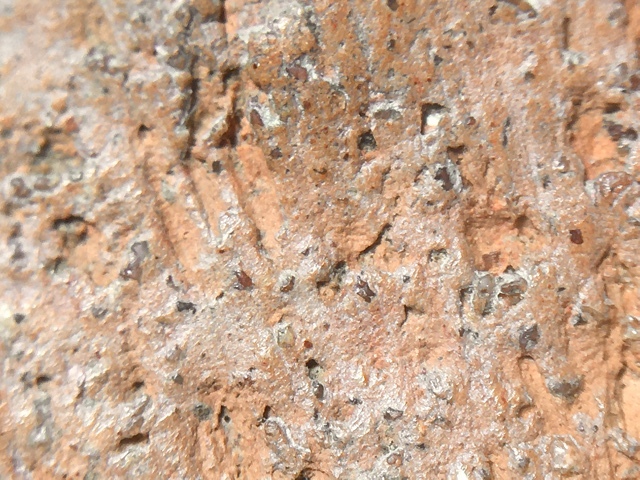
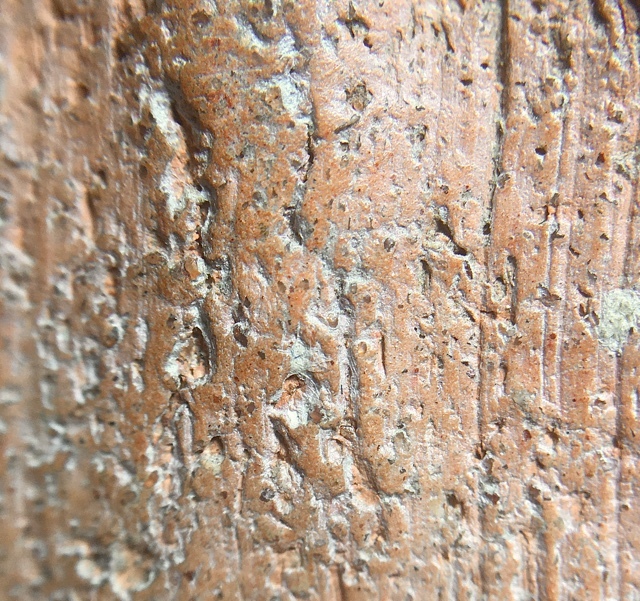
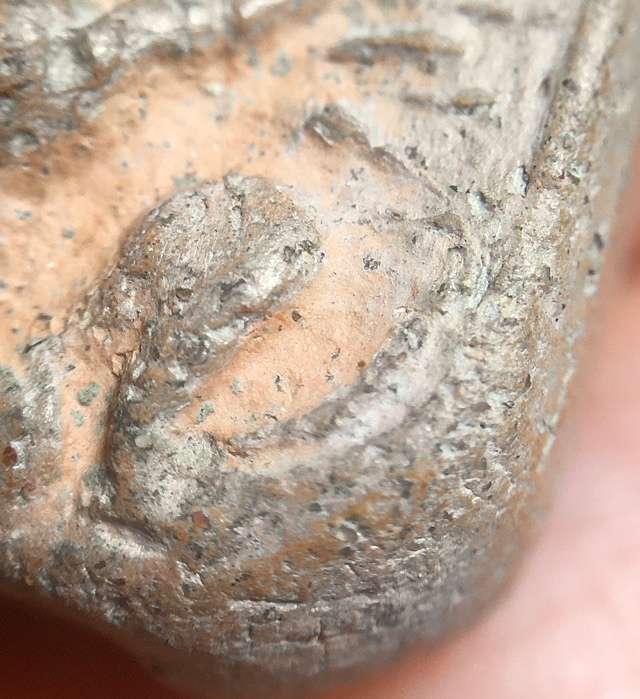
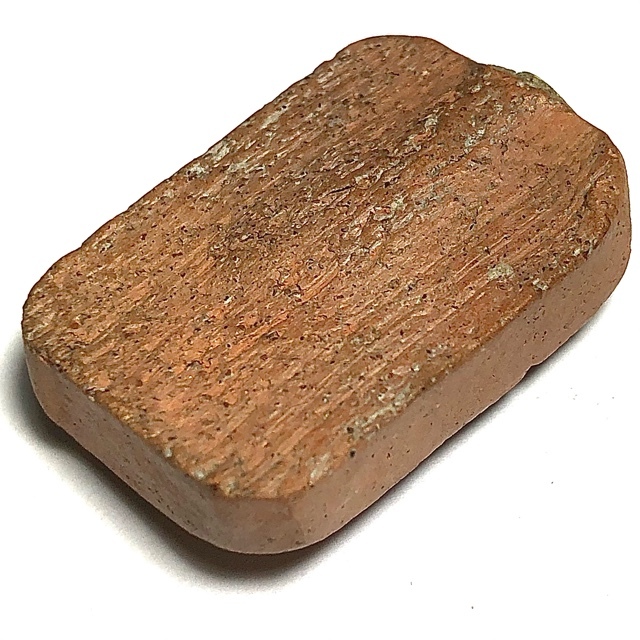
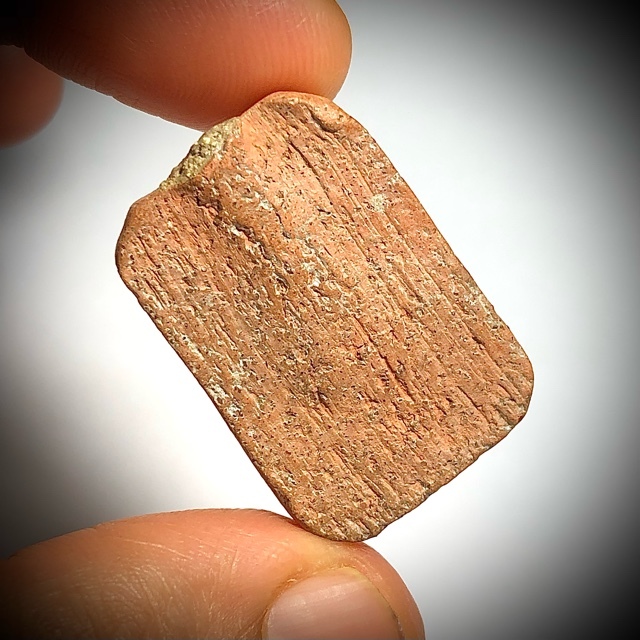
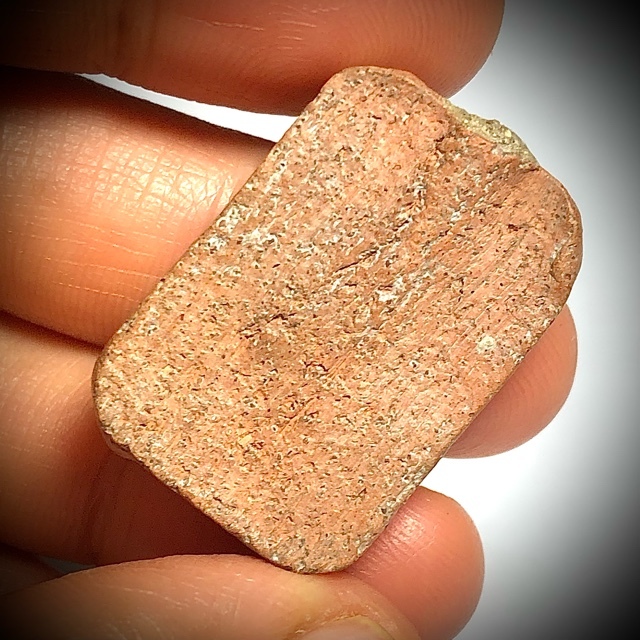
6. The Muan Sarn Sacred Powder clay shows all the typical aspects and surface sheen, authentic Muan Sarn Sacred Powder content, and natural aging characteristics, which are highly evident to the naked eye.
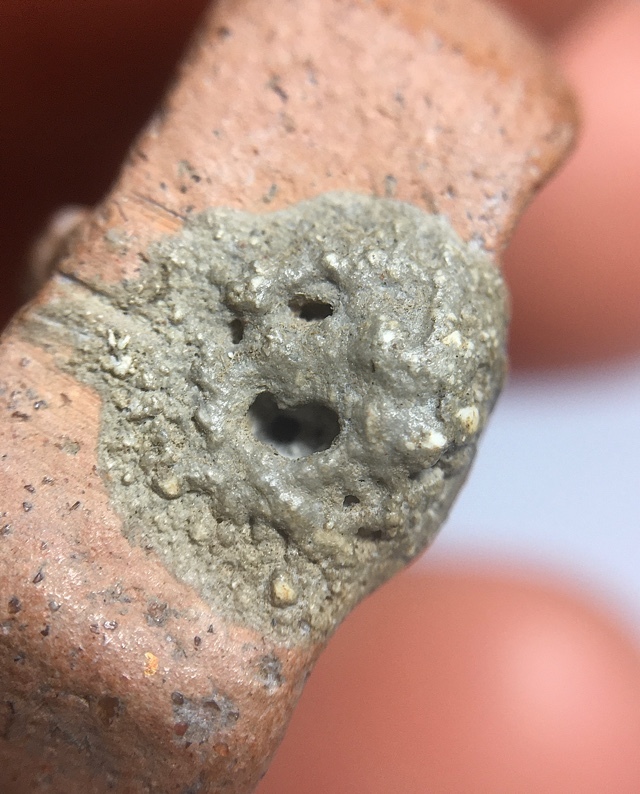
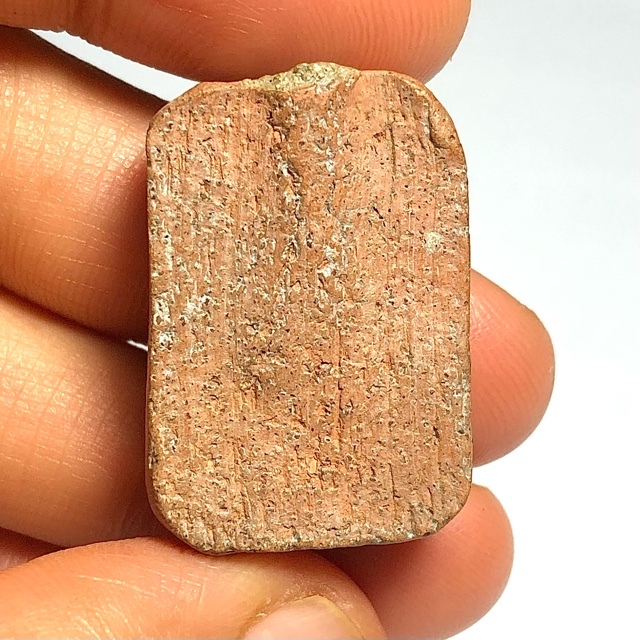
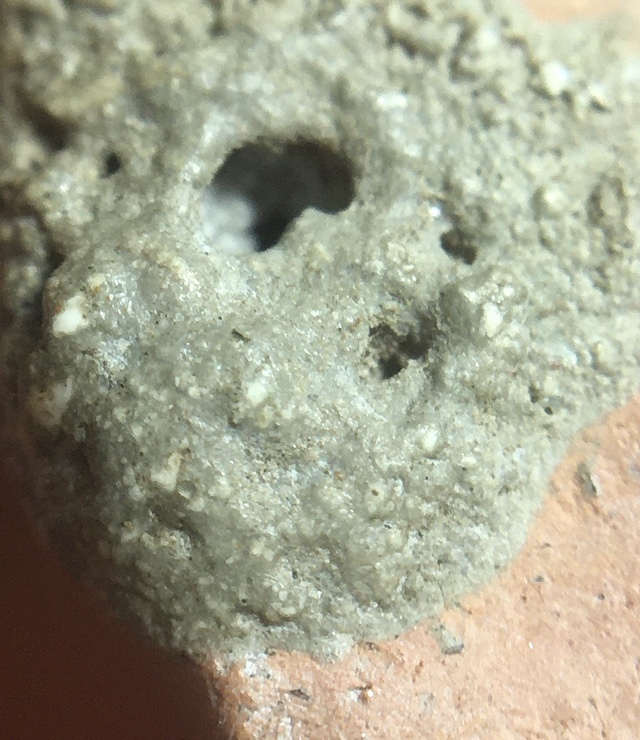
7. The Pong Wised Muan Sarn Sacred Powders stuffed into the top cavity are so hardened with age as to be hard as concrete,due to over a century of aging in natural atmospheric conditions. This natural uneven petrification and hardening, and contraction of the Pong Wised Muan Sarn Sacred Powders is impossible to fake, and is a true revelatory characteristic of authenticity in an amulet
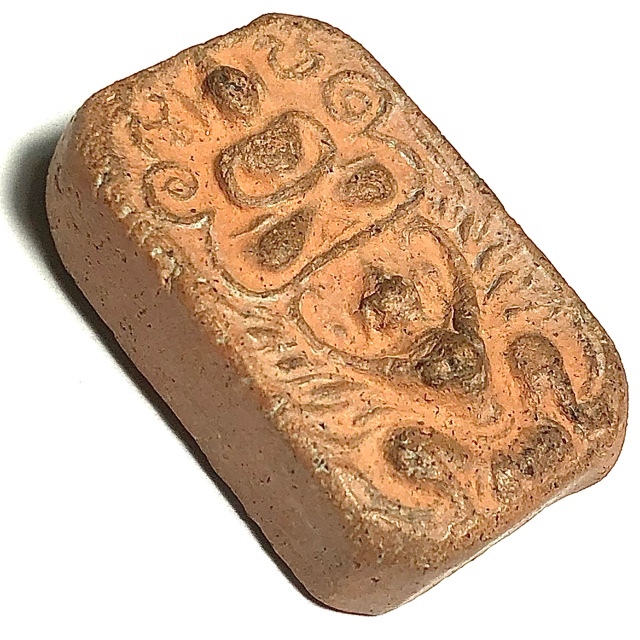
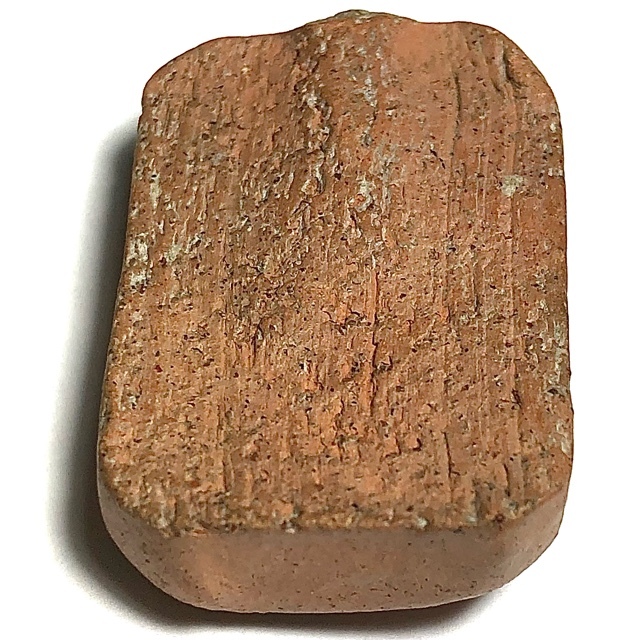
8. The angled oblong corners of the amulet show true contraction and age that can only arise through the natural passage of time, and natural hardening and drying, and contractions through passage of long periods of time.
This particular model is in a classic Terracotta colored clay and possesses all the classic features of the 'Dtamni' (Athentication Marks) for classifying itself as a true prefferred class of Pim Niyom Amulet by Luang Por Parn, and is hence possible for entry into competition with confidence of a prize. These days, few people can find themselves honored to have the chance fo encounter such an amulet to possess for their own collection, for which reason this amulet needs no explanation as to why this is a most desirable acquisition to have in one's personal museum collection, and even more so, to be able to wear it and be under its protective influence and receive its blessings.
A truly world famous classic amulet of the highest class and category, which anybody from the poor man to the millionaire will wear with pride and confidence of its magical powers. Who indeed does not wish to have a Luang Por Parn Wat bang Nom Kho Buddha Amulet on their pendant chain around their neck? We would say that there is not a single amulet lover on the Planet who would not wish to wear such a sacred Ancient Amulet as this.
Biography of Luang Por Parn
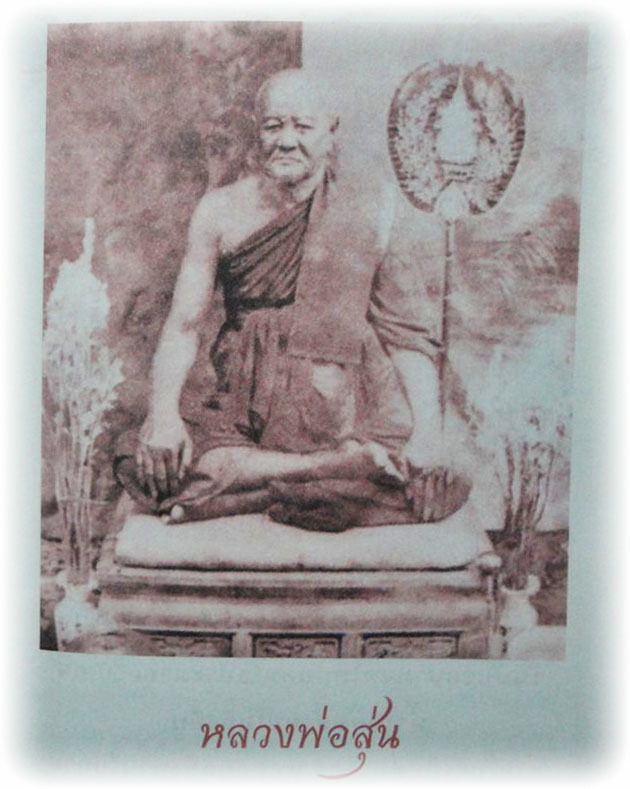
Luang Por Parn Sunantoe's real Ordained Monk name was Pra Kroo Wiharagijjanugarn. He was born in 1875 (BE 2418.) , the youngest son of Mr. Aaj and Mrs. Im Sutawongs. During his younger age, he received the a nickname of " Parn " , because of a red Birthmark on the little finger of his left hand, which was seen as an unusual trait mark that linked with Buddhism.
Luang Por Parn received his Ordination as a Bikkhu (Buddhist Monk) on the First of April 1895 (BE 2438).
Luang Por Parn is worshiped as one of the Top 10 Greatest Guru Monks of present-day in Thailand & many worshippers all around the world. He was the closest disciple of Luang Por Niam Wat Noi, Suphanburi, and also a disciple of Luang Por Hnoeng, of Wat Klong Madarn. His two great teachers passed away with their bodies un-decayed.
Above; Luang Por Niam, Wat Noi.
When Luang Por Parn passed away in B.E.2480, his body was also un-decayed similar to his Guru teachers.
Above; Luang Por Hnoeng of Wat Klong Madan
In 1932, five years before he passed away, he announced to all his disciples the date and time of his death. His precognition was quite clear and exactly correct; he passed away on the date and time he had preannounced. Luang Por Parn was a meditative Guru Monk and also possessed magical knowledge. During Buddhist Dhamma, it was recorded that he reached the “ Great six knowledge of miracles ”. So he possesses knowledge on precognition, out-of-body ability, mind detecting, ability to do comprehensive paranormal phenomenal feats of magical prowess.
He was of course famous for the Wicha of the Yant Grao Paetch Diamond Armour Yantra Spell, and for the Kata which many International Devotees have come to know as the 'Rich Kata'. It is said that this Kata can make you immensely wealthy as a Millionaire if chanted constantly and regularly without fail.
The legends of the powers of his Yant Grao Paetch spell are known by devotees around the world to be perhaps the most powerful Invincibility Spell of all, as well as providing an extensive set of Buddhist Blessings for Luck, Karma Improvement, Prosperity, Protection against all Ailments and Dangers, and of course for Wealthy Fortunes.
Apart from this, he also possessed the highest state of “ Vipassana ” or knowledge of mind cleaning to stop next rebirth (Reincarnation). It was his great Dhamma practice that had cleaned and " distilled " his inner body (astral body) to crystal-like state which changed his body's cells immortal. Many great Guru Monks in Thailand hinted their Dhamma levels to their disciples in such way.
Luang Por Parn's famous amulets have marked long-time uncountable records in warding off dangers of all kinds. And it's great for making holy water for healing illness that modern physician not able to diagnose & cure. Luang Por Parn'samulets are extremely unique withBuddha sitting on a Garuda, Hanuman, Porcupine, Fish, Cockerel, and Bird.
Once Luang Por Parn told his disciples that his amulets had been blessed for a period of three months, it's long time more than enough to charge Buddha's power into amulets capable of warding off dangers of all kinds. He said that if they were blessed for 3 years, the Garuda and the Bird on the amulet would fly out. (A real life news reporting of bird image flew out from the amulet was published in a Malaysia Chinese newspaper; A shop’s CCTV of the amulet’s owner recorded the “ flying bird ” flying around his shop and flew back into the drawer where the amulet was kept.)
Luang Por Parn's amulets are very popular among Thai amulets users and collectors because of their frequent miraculous phenomena both recorded and unrecorded. After his Ordination, Luang Por Parnstayed at Wat Bang Pla Hmor to study Gammatan and Vipassana, along with various Buddha Magic methods under the Supervision of L.P. Sun; Specializing in the topics of curing illness, physical aches and pains, and also curing people who were under the bad influence of black magic &harmful spells.He attained the level of " Adept " extremely quickly.
He also spent 2 years studying " Bariyadti Dhamma " , and Pali Sanskrit language under the Supervision of"Ajarn Jeen", from Wat Jao Jed; then continued his studies at Wat Sragaed in Bangkok, until his completion in " Apitamm " (Abhidharma) 5 years later.
When in Bangkok, Luang Por Parn recieved extra training in Traditional Buddhist Medicine at Wat Sangwaes. Luang Por also recieved training in Gammatan from Luang Por Niyam of Wat Noy in Ampher Basng Pla Ma, Supannburi Province, for a period of three months. In addition, he was trained an extra month by LP Hnoeng, of Wat Klong Madan in Ampher Sorng Pi Norng, Supannburi.
While in the forest, LP Parn received the secrets of creating Clay magical Amulets, in the form of a set of six different images from " CHI BA KHAW " . These 6 Amulets are the set of six Clay Buddha Amulets that are so revered and hard to find these days; considered by Disciples of Wat bang Nom Kho to possess extremely powerful magic.
The Secret of " Yant Grao Paetch " , or " Diamond Armour/Diamonjd Shield Yantra " as it has come to be known in the English language, was obtained from " Ajarn jaeng " , a lay Practitioner and Master of Yant and Buddha magic.
After completion of his training, Luang Por Parn inaugurated the Pali Sanskrit and Dharma school at Wat Bang Nom Kho. Apart from this, he assisted in the building and development of up to forty Temples around Thailand, including the additional construction of Shrines for other Temples that were already in existence(known as Bote in Thailand).
He is considered to have had to have possessed Extremely Great Virtues to have been able to attain the creation/construction of such institutions and enable the growth of Buddhism and spreading of the dharma on such a massive scale.
After Completion of his studies under Luang Por Sun, he performed " Tudongk " (Wandering alone deep through the Jungle). He wandered as far as the frontier to Burma, and encountered various strange Phenomena during his journey. Those strange encounters became legends, which are enough to fill a large book in themself.
In fact, there is a 900 page book recounting the Tudong Tales of Luang Por Parn, which include stories of his looksit Luang Por Ruesi Ling Dam of Wat Ta Sung, who was of course the Lineage Magic Inheritor and First Apprentice to Luang Por Parn at Wat Bang Nom Kho.
Above; Luang Por Sun of Wat Bang Pla Hmor
After his returning to Wat Bang Nom Kho, he performed Spiritual and Budhist medicinal healings for devotees who came with their problems. He treated the physical illness and also people under the in bad influence of Magical Spells and Curses. It is said that he who received treatment from Luang Por Parn was healed of his problem without any single exception !!!
Luang Por Parn had an extremely gentle appearance, with the Light complexion and aspect of a gentleman from the high society. His voice was soft, polite and pleasing to all ears. His mouth was always slightly curver upwards with a slight smile, and he possessed great compassion for both human and animals.
He didn’t separate social castes, receiving every visitor with the same compassionate and welcoming attitude, regardless of their social standing or ranking in the society. Social castes are irrelevant to him no matter one was a millionaire, a gentleman, royalty or a working class farmer or beggar. It is said that if a bad person, a thief, or drunkard paid a visit to Luang Por Parn, he would change his attitudes after visiting to Luang Por Parn, and became kinder, gentle and less wayward.
Luang Por Parn's daily routines when at Wat Bang Nom Kho; After the daily last meal at 11 am, he would rest a short while, after which, he would sit and receive visitors to help them with their requests. While waiting, he would prepare " Nam Mooh " (Prayer Water), for treating people with illnesses. There were an incredible number of people who came to see him in order to cure all sorts of illnesses, or were under the influence of Black Magic & Curses. Luang Por Parn treated people into the late hours, no matter how tired he might be. Even though he is no longer with us, he has given Buddhist people and those who believe in his ultimate powers an inheritance of the Body, Soul, Mind & also Fortunes. Luang Por Parn was well known for his Buddha Magic and Buddhist medicine & healing methods. He created powerful amulets during the Buddhist year BE 2460 (1917). He was famous for finding the extremely well known and powerful Katha/ Yant (mantra) of Grao Paetch (Diamond Armour )in the Buddhist year BE 2458 whilst making a pilgrimage to Suphanburi province. Famous for his discovery of the Sacred Yant Grao Paetch Diamond Armour Yantra.
LP Parn was very filial to his Mother and Father, who he cared for in their old age and times of illness. Even though LP Parn was abbot of Wat Bang Nom Kho temple. He brought them to the Temple and allowed them to stay in his Guthi, taking care and feeding them, and often wash his mother's clothing, regardless of his High status and amount of work he had to perform, he always make up time to take care his Parent.
In Buddhist teachings, one's Mother is seen as the most sacred person in Life, due to the pain she goes through in giving “Birth” to us, the worry when our young age and care she has for us as her children. When praying in Buddhist belief, the lighting of 5 incense sticks has the meaning of dedication : first three sticks to the Triple gem (Buddha Dharma and Sangha) , the fourth stick is to dedicate to one's Mother and father, the fifth to the Kru / Ajarn, meaning Teacher/Master.
After returning to his hometown, Ayuttaya , Luang Por Parn became the third abbot of Wat Bang Nom Kho, because he had reached a very high level of meditation and the people there respected him very much and showed confidence on him. Luang Por Parn returned to Wat Bang Nom Koh to teach the locals meditation and Buddha. He then rebuilt Wat Bang Nom Koh and turned it into a majestic temple.
Luang Por Parn also help to re-build as many as 41 others temples in Ayuttaya. In fact, Luang Por Parn had once met Ajahn Pon, an ordinary monk , and was curious to see him distributing money every day to different temples for sponsoring and helping to rebuilt temples everyday.
So Luang Por Parn asked him about his job and why he was so rich that he did not need to work ands went to temples everyday. Ajahn Pon replied that he had no job nut often chanted some incantations and this made him become rich.
In the beginning, Luang Por Parn was doubtful about Ajahn Pon's ability but as time went by, Ajahn Pon still donating to the temples. At last, Luang Por Parn believed Ajahn Pon's words and learned the incantations from him.
They possess magical effects and can bring wealth as well as giving protection. Later, Luang Por Parn became famous for these incantations. Luang Por Parn had once said that he would be able to concentrate chanting these incantation regardless of whether he was walking or sitting.
There was once a person asked Luang Por Parn what effects the incantations had. Luang Por Parn answered, that if he chanted the incantations sincerely, the scriptures would make him become richer: if farmers chanted the incantations, they would have a good harvest, the quality and quantity of the crop yield would be better as well as avoiding insect pests and disasters.
For business people, their products would be saleable and for employees , they would work smoothly, be promoted or enjoy salary increment. As long as they are sincere, then they will be rewarded. The following are the incidents which are quite well known among the locals. Luang Por Parn was a master that had many disciples. whenever Luang Por Parn needed money for temple used, his disciples from near and far would come to his aid.
Most of the money spent on renovations came from the sales of amulets as well as donations from his disciples. Beside building temples, Luang Por Parn also helped villagers treat their sickness and free them from the spell. luang Por Parn would use holy water and herbs mixed with Pali scriptures, and meditation power to help the villagers. All the people who went to him would have their problems or illnesses solved in the end.